Three pieces, and the headband decides everything
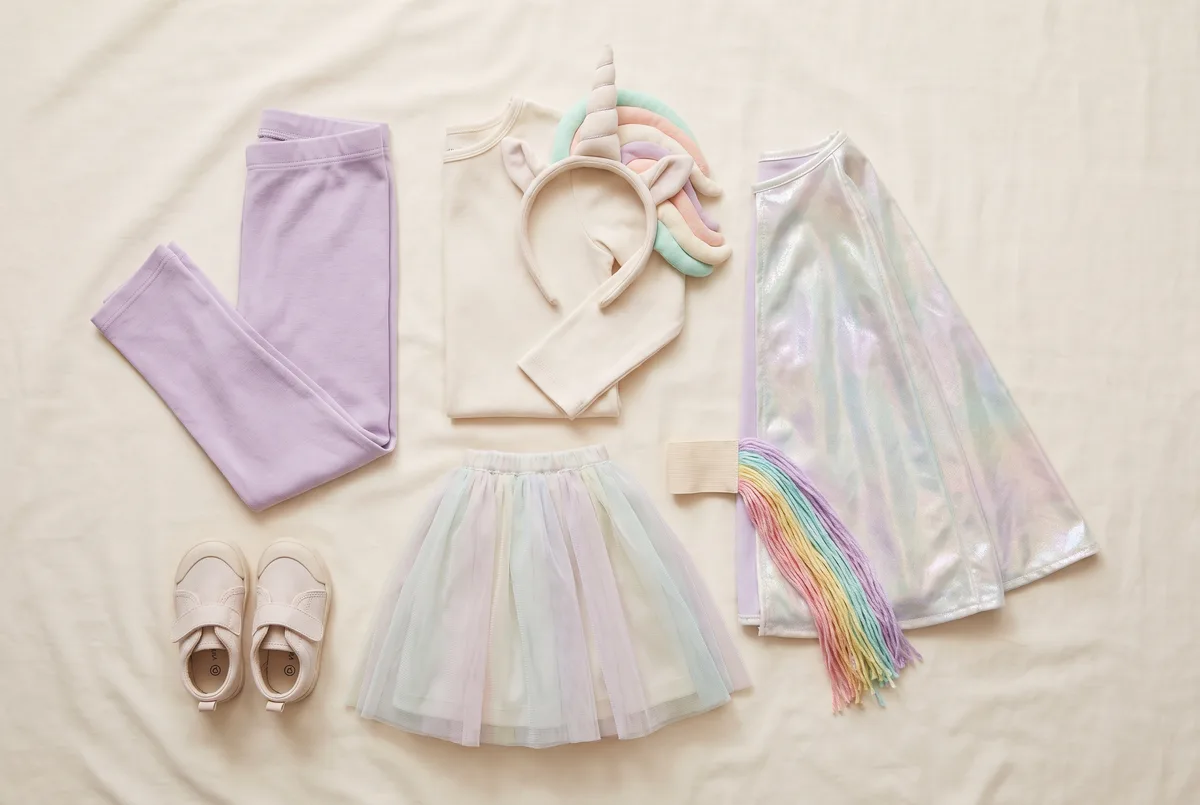
A unicorn needs a horn, a mane, and one sparkly layer. That is the whole specification. Everything beyond it is decoration, and most of it makes the costume less likely to be worn.
Of those three, the headband is the piece that determines whether the costume lasts an afternoon or twenty minutes — and it is chosen almost universally on the wrong criteria. People buy the horn that looks best in the photograph. The horn that works is the one with a padded band, no combs or teeth, and a short lightweight horn, and those two descriptions rarely apply to the same product.
A tall rigid horn on a narrow plastic band is the single most abandoned item in children's costume shops. It presses behind the ears, it levers backwards when the child runs, and it will be in your bag before the party food.
The base outfit
Pastel clothes the child already owns. White, cream, lavender, mint, pale blue, blush, or soft grey — any of them read as unicorn once the horn goes on.
Cotton and jersey beat costume satin comfortably here. Preschool unicorns sit on floors, eat, paint, and go outside, and a washable base is what allows all of that. A pastel hoodie is a genuinely good unicorn base for a cold day, and it has the useful property of being a hood, which we will come back to.
Do not buy new clothes for the base if you can avoid it. The base is invisible in every photograph — the horn and mane are what read — so its only job is to be comfortable and roughly the right colour.
Choosing the headband properly
Four things to check, in order of how much they matter:
Padding on the band. Fabric-wrapped or foam-padded, not bare plastic. This is the difference between a headband a child forgets they are wearing and one they are aware of constantly.
Band width. Wider spreads pressure. Narrow bands concentrate it behind the ears, which is where the ache starts.
No combs or teeth. These are sold as "secure" and they are the reason headbands get pulled off. For fine hair especially, teeth dig in within minutes.
Horn height and weight. Short and light. A tall horn is a lever — every time the child runs or bends, it pulls the band backwards.
If you are making one, a padded fabric horn stitched or glued to a wide covered band is straightforward and considerably more comfortable than most bought versions.
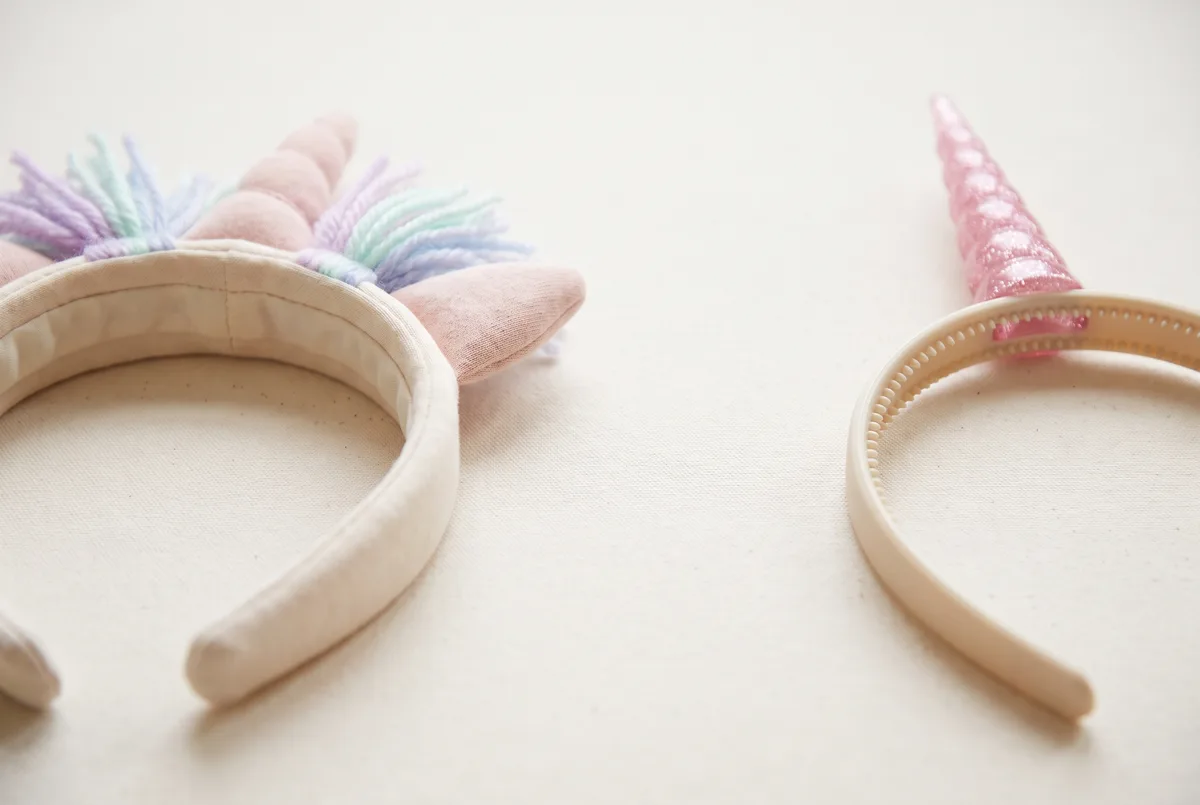 The one on the right photographs better and comes off within about ten minutes. The teeth on the underside are the part to check before buying.
Mane options, including for children who refuse headwear
The mane is what turns a horn into a unicorn, and it does not have to be attached to the headband.
On the headband is the most common approach — yarn, felt strips, or fabric fringe attached behind the horn. Keep it light; a heavy mane drags the band backwards.
On a hood works better for many children. A pastel hoodie with felt or yarn strips glued along the seam gives the whole mane effect with no headwear at all, and hoods do not need to be kept on.
As a scarf or collar in rainbow colours sits on the shoulders and can be removed and put back without help.
That last point matters more than it sounds. For a child who takes headwear off on principle — and there are many — a mane collar, a rainbow scarf, or an iridescent cape carries the character on its own. The costume does not fail because the horn came off; it only fails if the horn was the only thing saying unicorn.
The tail: attach it high
Tails are where unicorn costumes create a real hazard, and the fix is placement.
Attach at the waistband, high. A tail hanging from the waist swings clear of the legs. A tail attached low, or one long enough to reach the back of the knee, gets stood on, sat on, and pulled — and because it is anchored at the waist, being pulled turns the child around.
Keep it short. Well above the back of the knee. Short fabric strips or a bundle of yarn is plenty; the tail reads from the colour and movement, not the length.
Use wide soft elastic, never a cord. And avoid heavy charms, bells, or anything weighted at the end, which converts a soft tail into something that swings with force.
For toddlers, we would leave the tail off entirely. At that age it adds a trip risk and very little recognition — the horn and a pastel outfit are already unambiguous.
Sparkle without the problems
One sparkly layer, and choose the form carefully.
Works: a tulle skirt, an iridescent cape, a sequinned vest with stitched sequins, a metallic scarf, a shimmer-print top.
Causes problems: loose glitter, glued-on gems, and shedding sequin trim. Adhesive-set gems release in warm water, so a single wash turns a decorative costume into a small-parts problem — and for anything a child under three can reach, that matters a great deal. Stitched decoration survives; glued decoration does not.
Face glitter, if you want it, should be cosmetic-grade product designed for skin. Craft glitter near eyes is a genuine corneal-scratch risk.
Keep the sparkle to one place. A tutu and a sequinned top and a glitter cape read as busy rather than magical, and each additional layer is another thing to be too warm in.
By age
Toddlers. Horn headband and a pastel outfit. No tail, no small trim, nothing with an accessible battery. A soft knit horn hat is often better than a headband at this age — it stays on, and there is nothing to press.
Preschool. The full three pieces. This is the age the costume is most wanted and most worn, and where comfort pays the largest dividend. Pack a backup — a scarf or a second headband — because a costume that fails at a party with no fallback ends the dressing up entirely.
Elementary. Children start wanting to modify and personalise. Give them fabric, felt, and a glue stick rather than a finished costume. A child who has made their own mane is markedly more attached to wearing it.
Making it last past the event
Almost every piece of a unicorn costume is reusable if you choose it with that in mind.
The iridescent cape becomes a fairy, a mermaid, water, ice, or a dragon. The rainbow scarf goes into general dress-up. The tutu is worn for its own sake by most preschoolers regardless of theme. The horn headband is the only genuinely single-purpose item, which is a reason to keep it cheap and comfortable rather than elaborate.
Wash what can be washed before it goes away, and check the trim while folding. Anything that has started shedding will be worse next season, not better.
Then put the cape, the scarf, and the tutu into the working dress-up collection rather than into a costume bag. They will get worn through the winter as six other things, which is the whole argument for building the costume from separates rather than buying a one-piece unicorn suit that can only ever be a unicorn.