The costume is already in the closet
Most no-sew guides open with a supply list. We would open with the laundry pile, because the single biggest predictor of whether a costume survives the day is whether the clothes underneath it are clothes the child already likes wearing.
Start there. Leggings, joggers, a hoodie, pajamas, a plain long-sleeve shirt, a comfortable dress. Then pick the character to suit the base you have, rather than the other way round — this is backwards from how costumes are usually planned, and it is why so many of them come off by lunchtime.
The base does most of the work through colour alone. Brown and tan will carry fox, deer, owl, scarecrow, explorer, or baker. Black carries cat, bat, spider, night sky, stage magician. Grey carries wolf, elephant, robot, storm cloud. Blue carries ocean, astronaut, rain, royal court. Green carries frog, dragon, forest, beanstalk.
Plain is an advantage here, not a compromise. A busy base competes with the one accessory you are about to add.
One signal, not five
A costume has to be readable from across a classroom in roughly a second. That is the whole design problem, and it is solved by one strong signal rather than by five small ones.
Ears say animal. A pointed hat says wizard. A crown says royal. A cardboard shield says knight. A satchel and a map say explorer. Add a second signal and you get a bit more clarity; add a fourth and fifth and they start arguing with each other, add weight, and give the child more things to lose.
The instinct to over-add usually comes from a worry that the costume is not enough. It is worth naming that worry, because the child almost never shares it. Children read costumes generously. An adult sees a plain grey outfit and one pair of felt ears; a five-year-old sees a wolf and gets on with it.
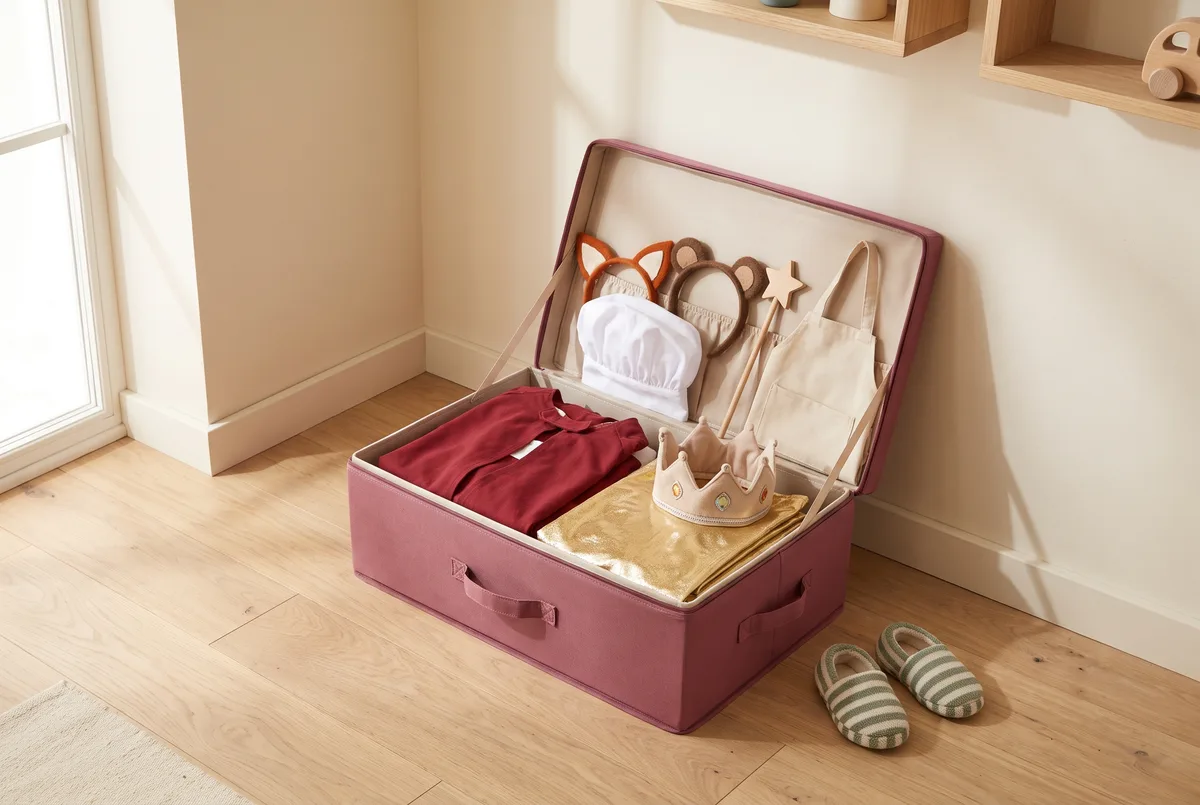
If you already keep a dress-up trunk, shop there before you shop anywhere. The cape, hat, or sash already in the house beats anything you can buy at 8pm.
Three formulas that always work
These three cover a startling share of what children actually ask for, and each is a base outfit plus one or two pieces.
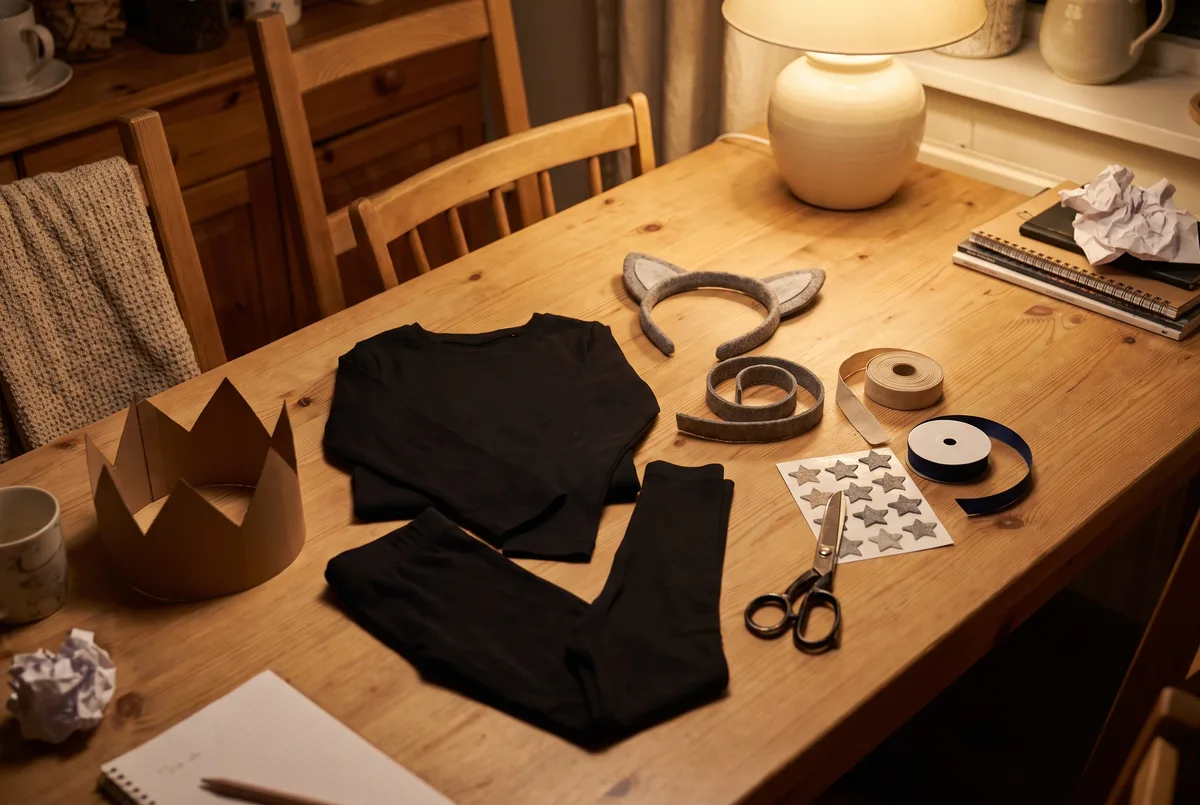
Animal. Base outfit in the animal's colour, felt ears on a headband, and a short tail attached at the waistband. Keep the tail shorter than you think — anything past mid-thigh gets sat on, caught in chairs, and pulled. A drawn-on nose with skin-safe face paint replaces the need for a mask entirely.
Wizard or witch. Dark base, a pointed felt or card hat, and a wand. Foil stars applied with fabric tape take about four minutes and lift the whole thing. A wooden spoon is a perfectly good wand and survives being dropped.
Royal. A tunic, dress, or plain shirt, one sash tied at the waist, and a crown. The crown carries the character, which means everything underneath can be chosen purely for comfort.
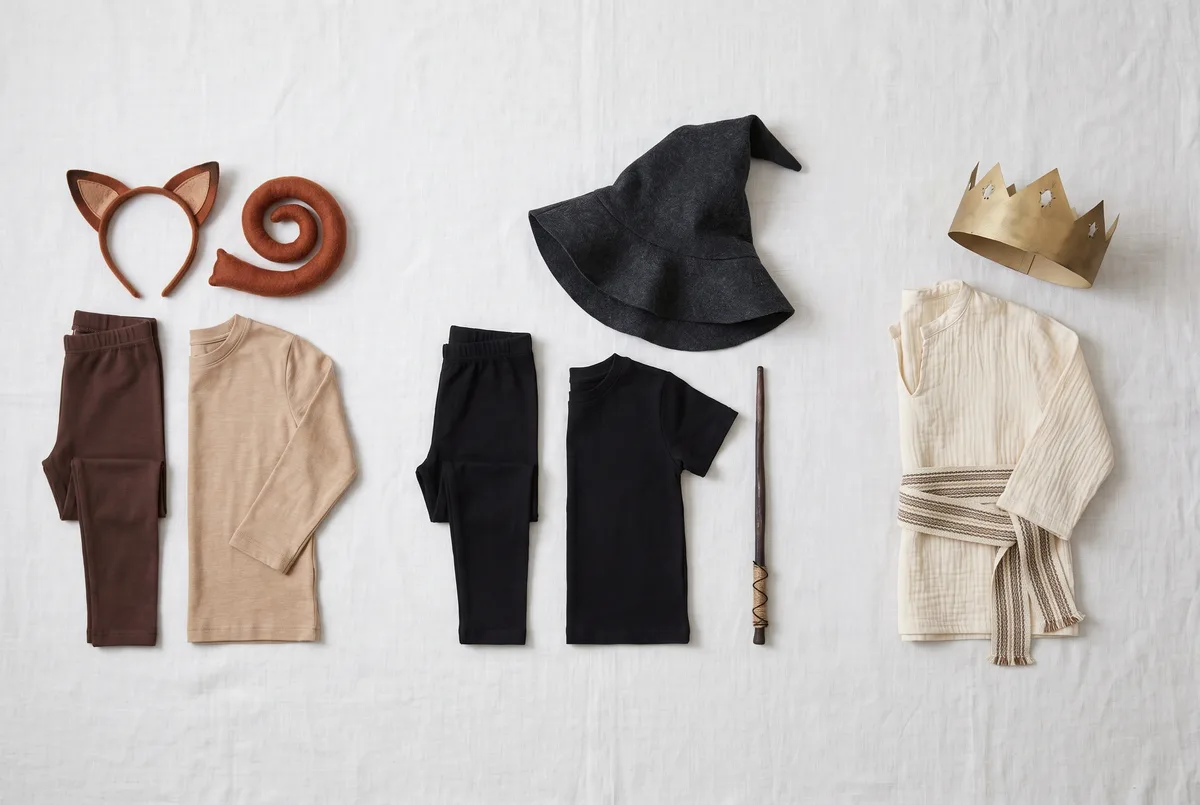 The same structure three times: ordinary clothes the child already owns, plus one accessory that carries the whole character.
Two more worth keeping in your pocket. A space explorer is grey or navy clothes, foil cuffs at the wrists, and a cardboard badge on the chest. A storybook adventurer is normal clothes plus a satchel, a scarf, and a hat — the best option by a distance for a child who dislikes dressing up but still has to turn up in costume.
Ten minutes, an hour, or an evening
Most costume advice assumes you have a free weekend. The more useful question is how much time is actually left, and the answer changes what you should attempt.
Ten minutes, tonight. One accessory on a plain base outfit, and nothing else. Ears and a matching-colour outfit. A sash and a paper crown cut from a cereal box and painted gold. A scarf, a satchel, and a hat. Do not start anything that needs glue to dry, and do not go to a shop — the trip costs more time than the costume.
An hour. Now you can add a second element and use materials that need a little handling. Cut a simple felt tail and attach it with a safety pin from the inside of the waistband. Make a cardboard shield or breastplate. Apply foil stars to a dark outfit with fabric tape. An hour is also enough to do a proper fitting and fix the thing that would otherwise have failed at school.
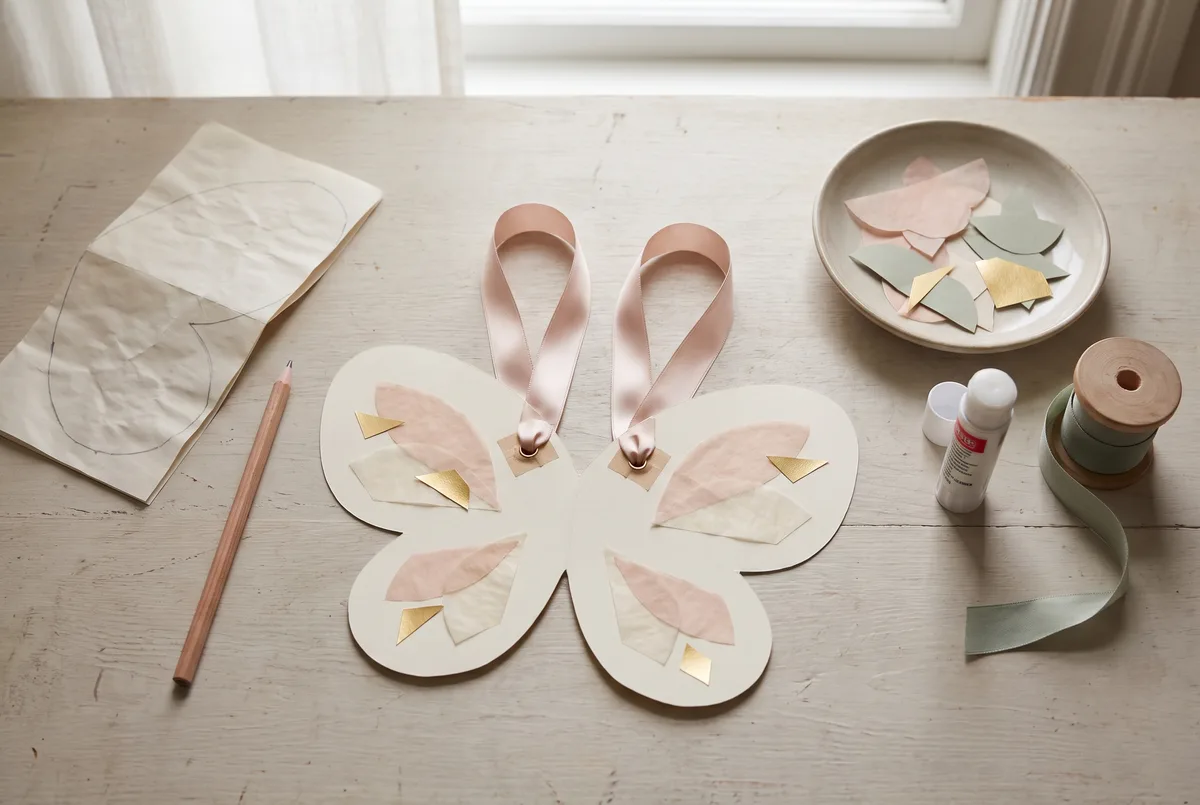
An evening before. This is when fabric glue becomes available to you, because it finally has time to cure — check the tube, but plan on several hours and overnight if you can. An evening is enough for an appliquéd chest emblem, a lined cape with a hook-and-loop collar, or a set of wings. It is also enough time to make the piece slightly too big, which is the correct error: a costume a size generous still fits over a jumper in October.
The trap is attempting the evening-before project with an hour available. A half-cured glue seam fails in the first twenty minutes, and you end up doing the ten-minute version anyway, at midnight, in a worse mood.
Fasteners, ranked by how long they actually hold
No-sew does not mean anything goes, and the fastener you pick decides whether the costume reaches the end of the day.
| Method | Realistically holds | Child can undo it | Washable | Best for | Watch out |
|---|---|---|---|---|---|
| Knots in fabric | All day | Yes | Yes | Sashes, skirts, cape ties at the shoulder | Never tie at the throat |
| Ribbon ties | All day | Yes | Yes | Waists, wrists, tail attachment | Keep ends short; no loops near the neck |
| Hook-and-loop dots | Several wears | Yes | Usually | Capes, removable badges, adjustable closures | Stiff edges rub at the neck and wrists |
| Fabric tape | A few hours | No | No | Hems, stripes, foil stars | Lets go in heat and humidity |
| Fabric glue | Many wears | No | Yes, once cured | Felt shapes, patches, trim | Needs hours to cure — not a same-day fix |
| Iron-on adhesive | Many wears | No | Yes | Badges and appliqués | Adult prep only, never a child's craft step |
| Safety pins | All day | No | n/a | Adjusting a waistband, out of sight | Never at the neck, chest, or anywhere they can be sat on |
| Staples, hot glue on fabric | — | — | — | Nothing worn on a child | Sharp edges and stiff, cracking seams |
The honest summary: knots and ribbon are the most underrated fasteners in the craft aisle, because they are free, adjustable as the day goes on, and the only ones a child can operate alone in a school bathroom.
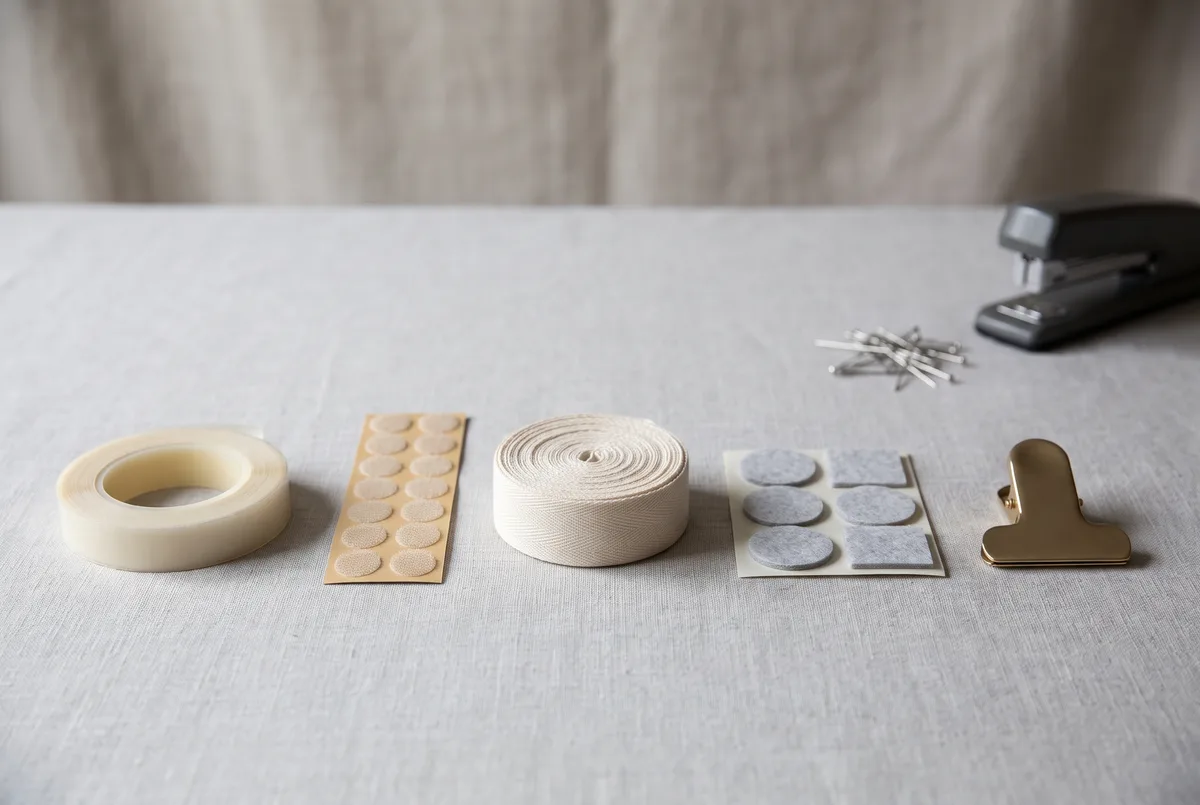 Everything on the left can go on a child. The pins and stapler on the right are prep-table tools at most, and never a closure.
The sit-down test
Two minutes at the front door saves the whole event. Have the child put the finished costume on and do five things.
Sit down on a hard chair. Walk up three stairs. Put both arms straight overhead. Go to the bathroom unaided. Then put their coat on over the top.
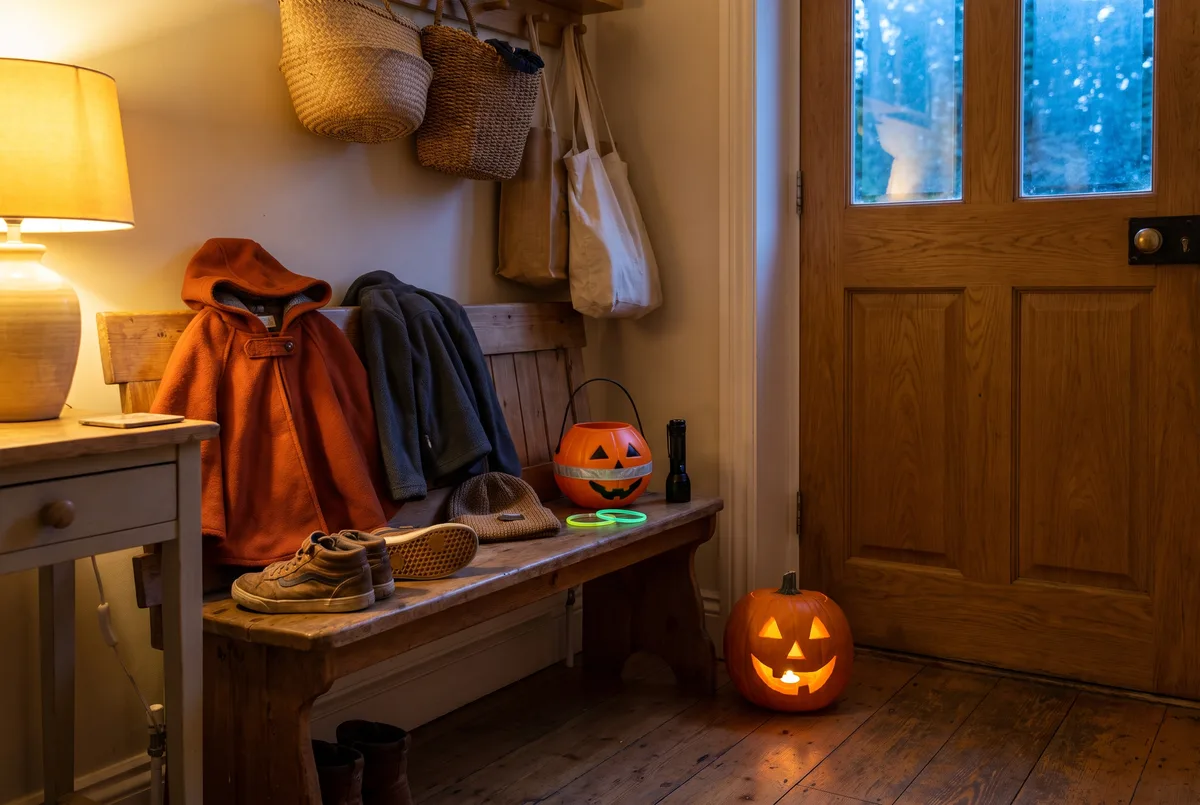
That last one is the step nearly everyone skips, and for an October evening it is the one that matters most. A costume built around a cape, wings, or shoulder details often stops working the moment a jacket goes on — and the jacket is not optional at seven in the evening. Either build the signal above the neck, where a coat cannot cover it, or plan for the costume to be worn over the coat.
What fails, and when
Costumes do not fail randomly. They fail on a fairly predictable schedule, and knowing it lets you design around it.
Within the first hour, anything that applies steady pressure comes off. Rigid headbands with teeth, tight elastic, and stiff collars all work the same way: the child stops noticing the character and starts noticing the sensation. There is no talking a child out of this, so choose soft and wide over firm and narrow, and accept that a headband with combs is a photograph prop rather than a costume.
Around the three-hour mark, adhesives give. Fabric tape is pressure-sensitive, which means its bond softens as it warms — a heated classroom, a coat worn over the top, or simple body heat all accelerate it, and humidity finishes the job. Anything load-bearing that relies on tape will be the first thing to fail. Hanging pieces go at roughly the same point, though for a mechanical reason rather than a chemical one: tails and long sashes are the parts other children grab.
By the end of the day, cardboard has failed at the folds. Corrugated board loses its stiffness once the flutes are creased and re-creased, so a helmet or shield that was rigid at nine o'clock is soft by three and is being carried rather than worn. This is not poor craftsmanship — cardboard is a one-event material, and building it any sturdier usually just makes it heavier.
The practical read: put the signal above the neck where a coat cannot cover it, use tape only for decoration and never for structure, keep hanging pieces short, and treat the elaborate parts as belonging to the first two hours and the photographs.
Keep two pieces, bin the rest
When the event is over, resist saving the whole costume. Sort it once, quickly, into two piles.
Keep what can rejoin the trunk and mean something else next time: the cape, the sash, the hat, the ears, a sturdy prop, the scarf. These are the pieces that turn one Halloween into three months of ordinary pretend play.
Let go of the bent cardboard, the shedding foil, the tape-marked trim, and anything that only ever meant one character. Saving it does not preserve the costume — it just moves the mess into the trunk and makes the next costume harder to build.
Done this way, every event leaves you one or two genuinely reusable pieces better off. That compounding is the real argument for no-sew: not that it is cheaper or faster, though it is usually both, but that it keeps adding to a collection instead of filling a bag in the loft.