The trunk is not the collection
Dress-up storage tends to fail the same way. It begins as a tidy basket, absorbs three birthdays and two Halloweens, and ends as a compressed layer of polyester at the bottom of a closet. No one decides this should happen. It happens because things only ever go in.
So the first thing worth separating is the trunk from the collection. The collection is everything you own. The trunk is the working set — the pieces in play right now — and it stays useful only if something governs what gets in. The governing rule we keep coming back to is volume, not taste: a child should be able to see into the trunk, reach the bottom of it, and put everything back without an adult kneeling on the floor beside them.
That single constraint does more for pretend play than any individual purchase. A child who can find the cape in four seconds will use the cape. A child who has to excavate will ask you to do it, and eventually stop asking.
Six to ten pieces, and why the number is that low
Six to ten sounds severe until you watch what actually gets worn. Past roughly a dozen items, two things go wrong at once: choosing takes longer than playing, and cleanup stops being a job a child can finish. Both push the trunk toward the closet floor.
The deeper reason is what the pieces are for. When a child throws a cape over their shoulders and announces they are a queen, a vet, a storm, or "the one who fixes the bridge," they are doing symbolic substitution — letting one object stand for another and holding a rule in mind while acting it out. That work needs ambiguity. A red cape can be royal, heroic, vampiric, a wizard's robe, a market awning, or a broken wing. A boxed spider costume is a spider, and it is a spider on the third wearing too.
This is why we would take one length of gold fabric over three branded character sets. The fabric loses nothing when the novelty fades, because it never depended on novelty.
If you already own far more than ten pieces, do not start by throwing things out. Pull ten into the trunk and put the rest in a reserve box. You will learn more about what your child actually reaches for in three weeks of rotation than in an afternoon of decluttering.
What actually earns a place
A trunk that covers most stories needs four jobs filled, not four categories bought.
Something that drapes. Two capes, or one cape and one square of fabric roughly a yard on each side. This is the backbone of the trunk and the piece most likely to be in use. Keep the hem above the back of the knee — anything longer gets stepped on going up stairs.
Something for the head. Two soft pieces, no more. A padded crown, a chef's hat, animal ears, or a simple hood will each flip a character in one second. Soft matters here: rigid plastic headbands with teeth are the accessory children abandon first, usually within ten minutes.
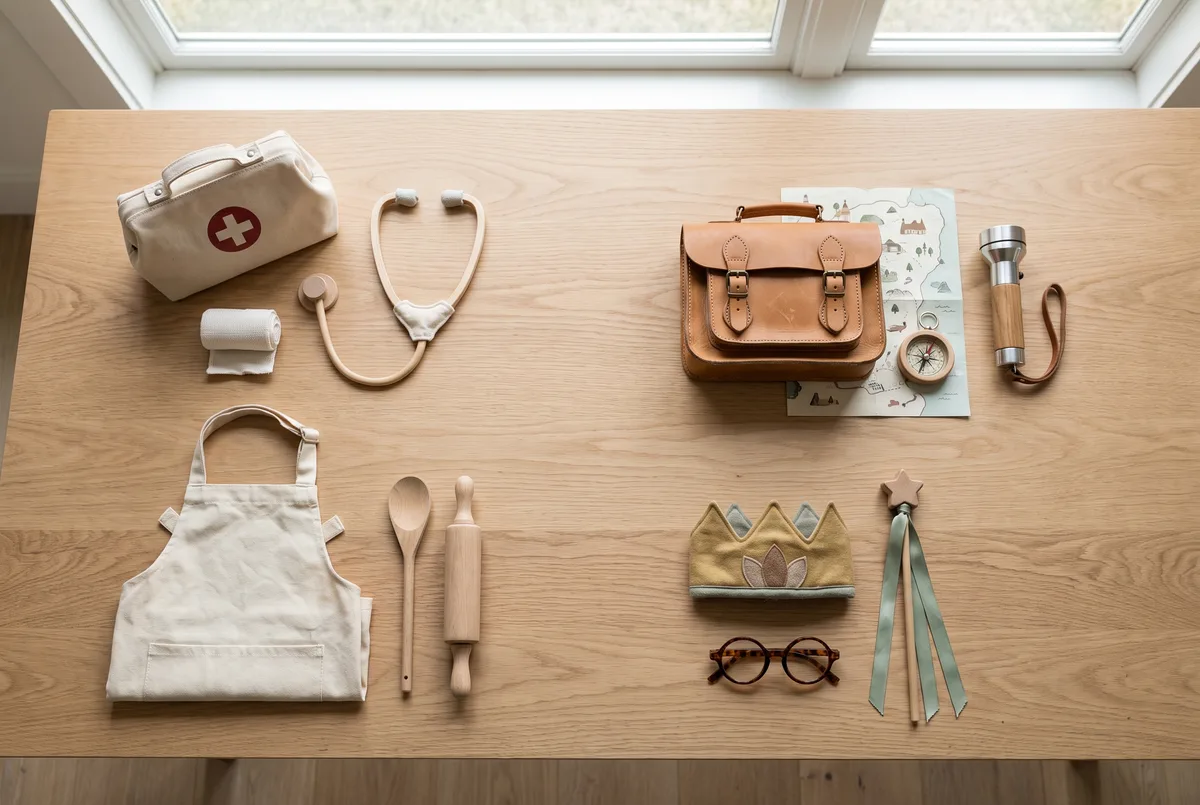
Two or three role markers. A wand, an apron, a satchel, pretend glasses, a clipboard, a wooden spoon. These are cues rather than costumes, and one per theme is plenty. Role markers are also the cheapest part of the trunk and the easiest to make.
Something for the feet. This gets skipped and it should not. Dress-up is physical — running, crouching, climbing on cushions, spinning until they fall over. Costume shoes with slick soles turn all of that into a fall. Grippy slippers or plain canvas shoes keep the game going and cost less than the character shoes they replace.
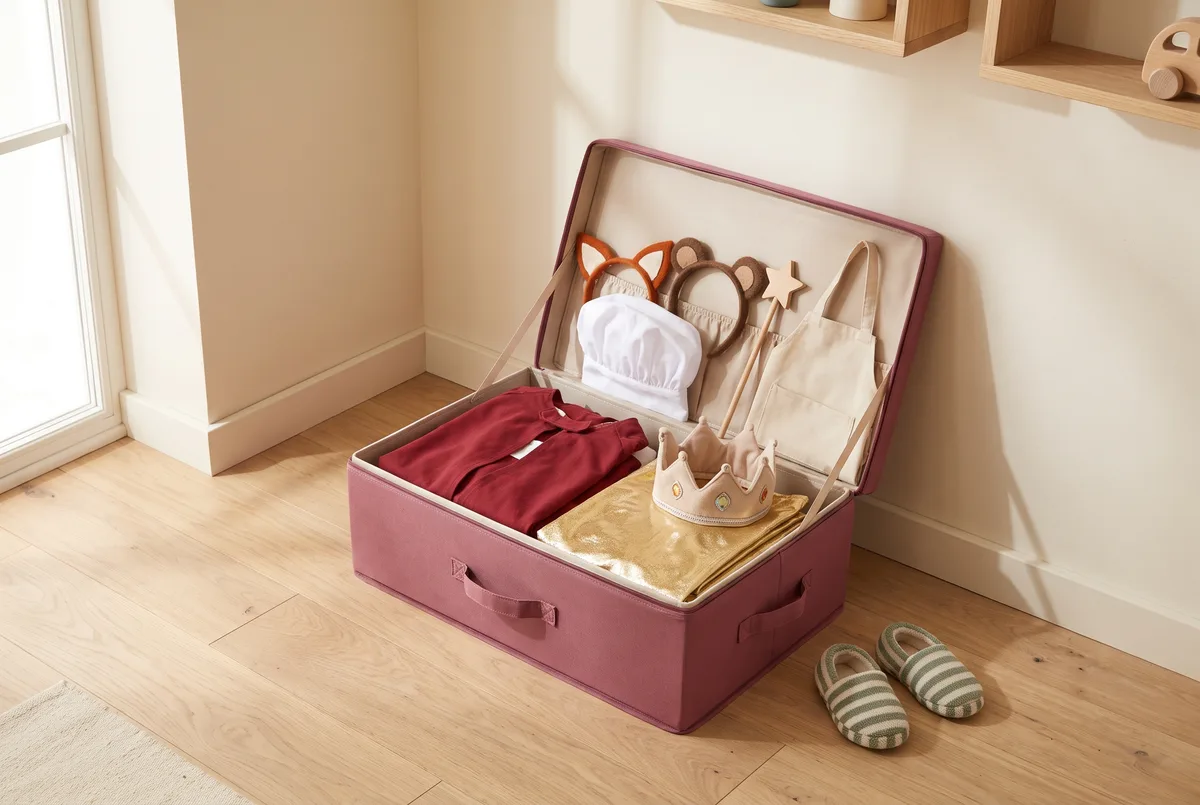
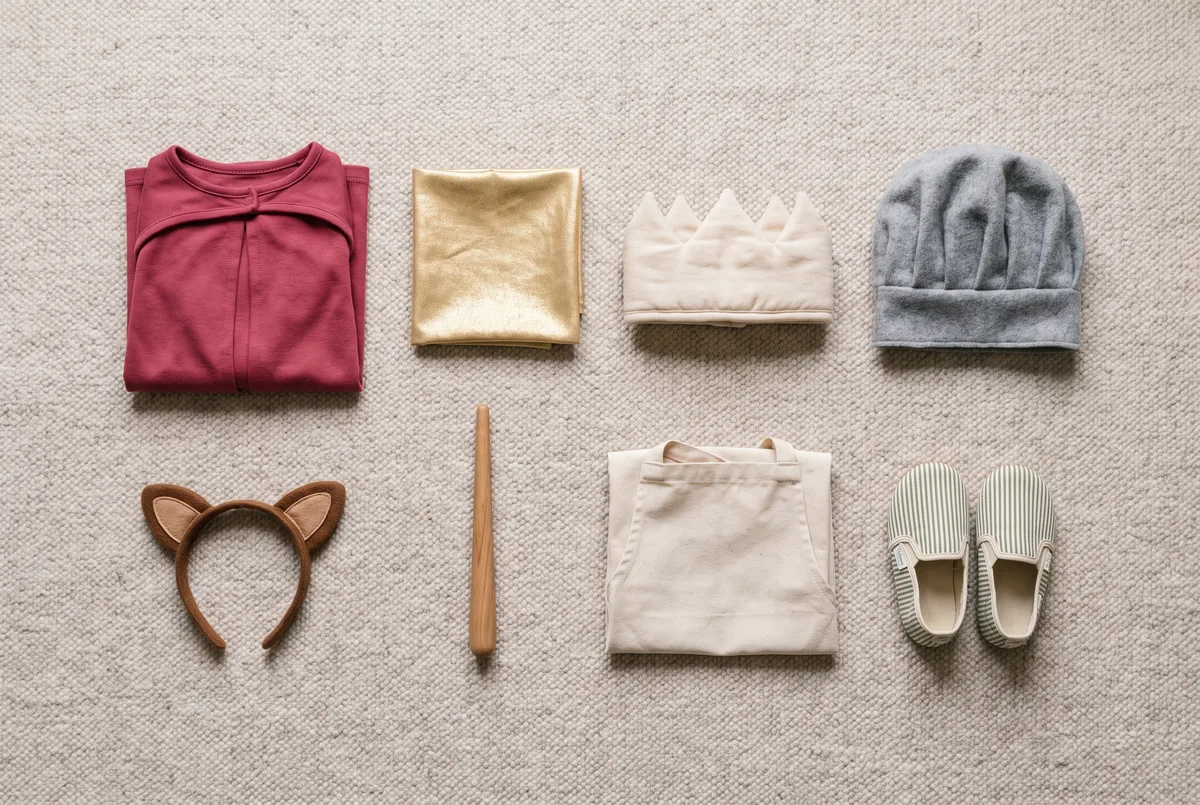 A complete eight-piece working set. Two draping pieces, two head pieces, three role markers, one pair of shoes — enough for most of what a four-year-old will invent, and small enough to reset in a couple of minutes.
The five-minute reset test
Here is the check we would apply before buying any storage, and periodically afterward: ask the child to put everything away, then leave the room and time it.
If a child cannot reset the trunk alone in about five minutes, the problem is almost never the child. It is the volume, the container, or the absence of an obvious home for small things.
Five minutes is not arbitrary. It is roughly the outer edge of what a preschooler will complete without an adult standing over them. Past that, attention goes, and a trunk that fails the test quietly becomes your job instead of theirs.
The number you get back is diagnostic, so it is worth actually timing rather than estimating:
- Under two minutes. The trunk is probably too small, or half the collection is somewhere else in the house. Add pieces before you add storage.
- Two to five minutes. Working as intended. Leave it alone.
- Five to ten minutes. One category has no obvious home. Nine times out of ten it is the small accessories. Watch where they hesitate — the pause tells you which pile has no address.
- Over ten minutes, or they give up. Volume. Remove four pieces and re-run it tomorrow.
Re-run the test after every birthday and every Halloween, because those are the two moments when volume jumps without anyone deciding it should.
The accessory fix solves more than it should. Wands, badges, glasses, and crowns are what sink to the bottom and make a trunk feel bottomless — they are small enough to fall through everything else and shaped too irregularly to stack. One open tray at the top, no lid, and they stop disappearing.
Age by age
What belongs in the trunk changes more than most guides admit. The container can stay the same for years; the contents should not.
| Age | What changes | Worth adding | Worth removing |
|---|---|---|---|
| 18 months – 2 years | Symbolic play is just starting. Wearing is the whole game; stories are short. | Soft hats, a lightweight cape with a hook-and-loop tab, chunky fabric | Anything with small parts, batteries, cords, or ties |
| 3 – 4 years | Play becomes story-driven and social. Children start assigning roles to adults and siblings. | A second cape so two can play, role markers, a mirror at their height | Rigid headbands, character shoes, anything needing adult fastening |
| 5 – 6 years | Costumes get specific and children start modifying them. Accuracy begins to matter to them. | Fabric they can cut, supervised safety pins, fasteners they operate alone | Toddler-sized pieces that pull at the shoulders |
| 7 and up | Interest narrows and deepens. Many children move toward making rather than wearing. | Sewing basics, raw materials, storage they control themselves | The trunk itself, often — a labeled drawer usually replaces it |
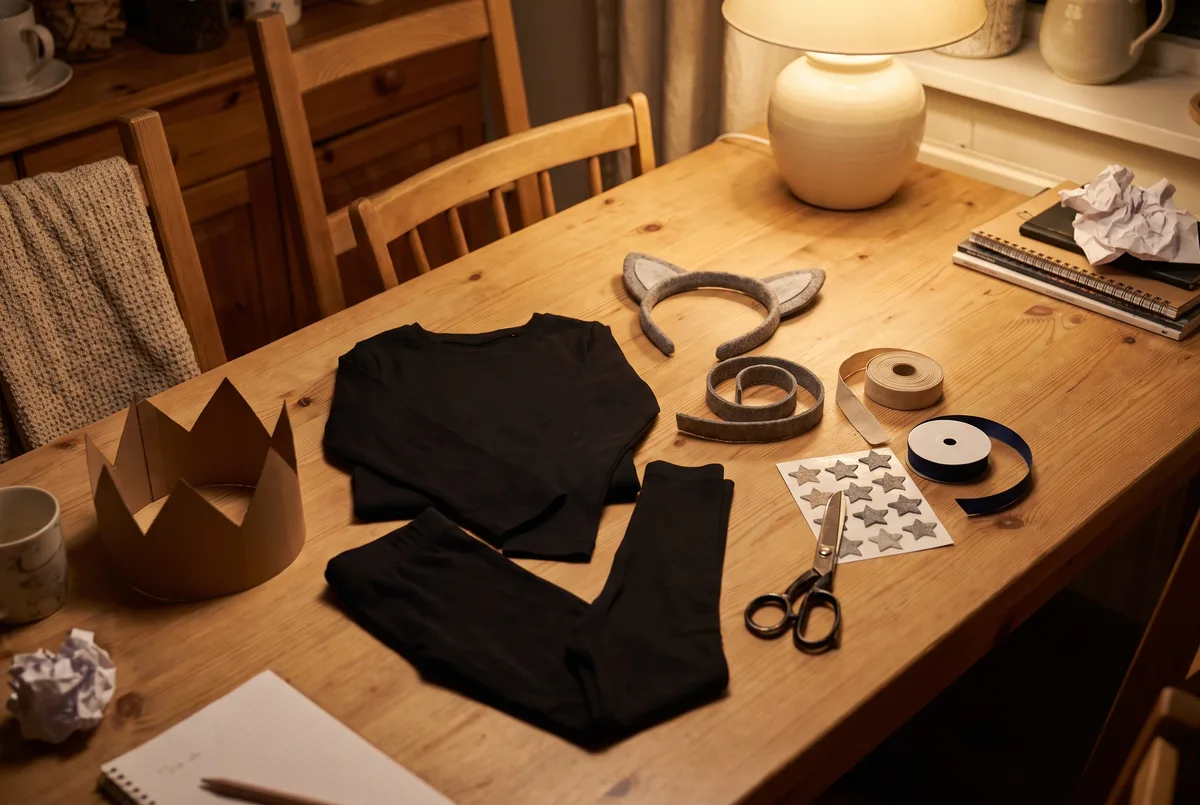
The transition at the end catches families by surprise. If dress-up seems to have died around seven or eight, it has frequently just moved: the same child who ignores the trunk will spend an hour building a helmet out of cardboard.
The safety pass we run before anything goes in
Costume pieces look harmless, which is exactly why this gets skipped. It takes about ninety seconds per item.
In the United States, toys sold for children under 14 must meet ASTM F963, the mandatory toy safety standard referenced in CPSC toy safety guidance. That is the floor, not a guarantee about how a piece behaves in your house — and a great deal of dress-up gear is sold as apparel or party supplies rather than as a toy, which means it may never have been tested against a toy standard at all.
Small parts. For anything a child under three can reach, check for detachable gems, shank buttons, snaps, beads, and shedding sequin trim. The federal small-parts cylinder used under 16 CFR 1501 is 1.25 inches across. An empty toilet paper tube is wider than that — closer to 1.7 inches — so it over-flags rather than under-flags, which is the direction you want in a home screen. If a loose piece drops through the tube, it does not belong in a toddler's trunk.
Closures. No drawstrings at the neck or hood. CPSC treats neck and hood drawstrings in children's upper outerwear sizes 2T–12 as a strangulation hazard, explained in its drawstring guidance. Capes should fasten with hook-and-loop tabs or snaps that release under pressure. If a cape ties, cut the ties off and add a tab.
Batteries. Light-up wands, tiaras, and shoes frequently run on coin cells, and a swallowed button battery can cause severe burns to the throat and esophagus within hours. Reese's Law set federal requirements for child-resistant compartments and warnings on these products; see CPSC button battery guidance. We would keep only light-up pieces with a screw-shut compartment, and check the screw each time the piece comes back into rotation.
Vision and airway. Masks that sit against the face restrict both. Face paint labeled for skin is a better trade than a rigid mask for nearly every character.
Flame. Loose synthetic fabric near candles, fireplaces, space heaters, and lit pumpkins is the seasonal risk most worth naming out loud.
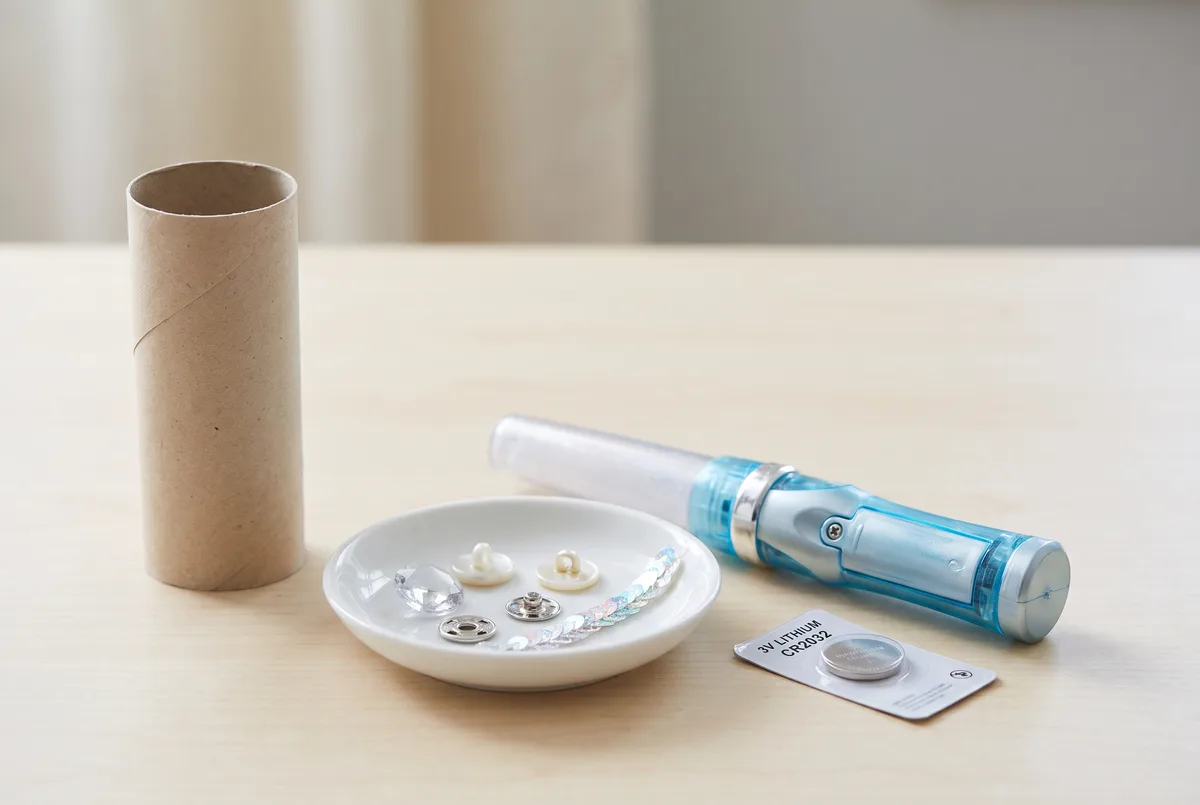 The ninety-second pass: anything that drops through the tube is out for under-threes, trim that sheds gets removed rather than repaired, and light-up pieces stay only if the battery door takes a screwdriver.
Storage a four-year-old can operate
Storage is a usability decision, not a decor one. Three setups work, and the choice depends less on your room than on what your child owns.
A low soft-sided trunk suits mixed collections and shared rooms. Look for a light lid — or none — flexible sides, and enough width that a cape lies flat instead of being crushed. Hard chests with heavy hinged lids are the one option we would avoid outright; they pinch fingers, and children stop opening them.
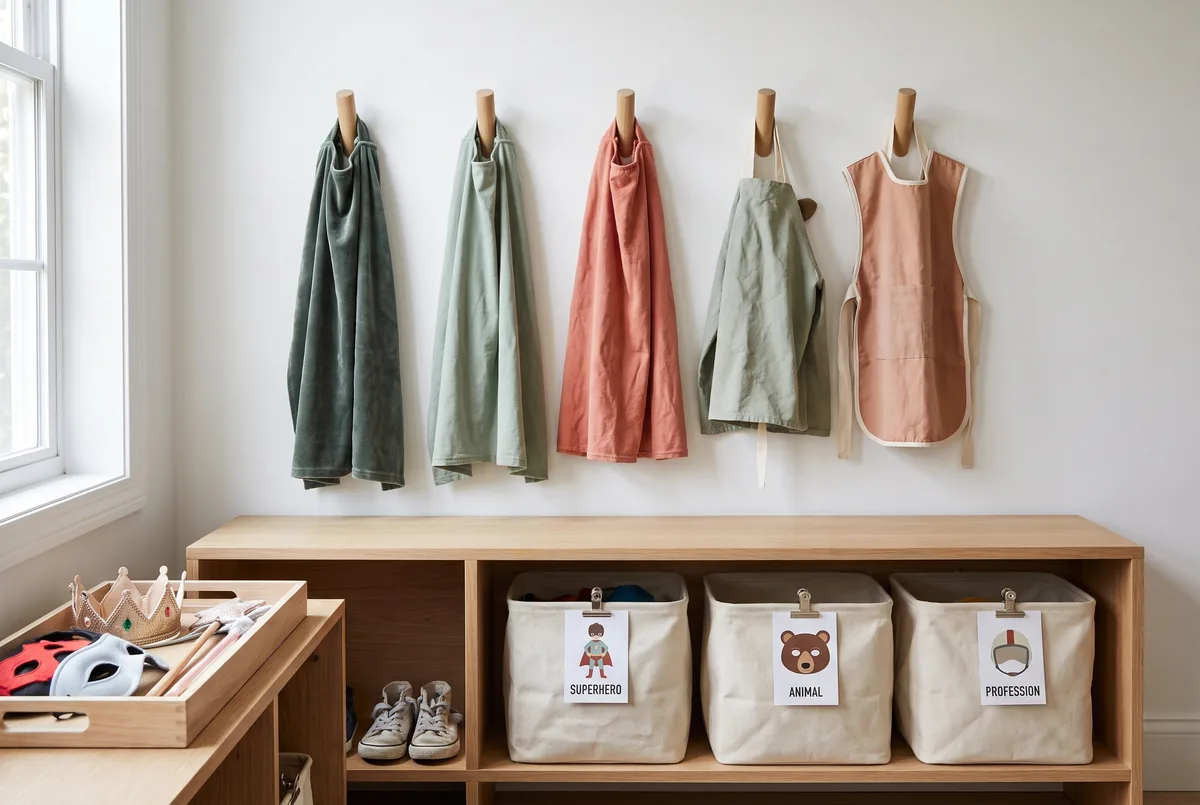
A short rack is right when the collection is mostly dresses, capes, and coats, because hanging keeps them visible and visible things get worn. Check the base width against the height. Low and wide is stable; tall and narrow tips when a child pulls down on the rail, which they will.
Low open bins win on cleanup speed, because "everything in this bin is hats" is a rule a three-year-old can follow. They lose on visibility, so they work best paired with a rack.
Most families we would point at a combination: a rack for the two or three showpiece layers, one bin for everything else, one shallow tray for accessories. Whatever you choose, put it where the child plays. A beautifully organized trunk in a spare room gets used roughly never. To compare the three properly, we go deeper in rack vs trunk vs bins.
Rotation is the organizing system
If the trunk explodes daily, the instinct is to enforce tidying harder. Usually the honest fix is that there is too much in it.
Keep a labeled reserve box on a high shelf and move a few pieces in and out every three or four weeks. Rotation does three jobs at once. It resets novelty, because a piece that has been out of sight for a month is functionally a new piece when it returns. It forces a damage check, since you handle every item on the way in. And it tells you the truth about what earns its space.
That last one is worth running deliberately. Mark the date on the reserve box lid each time you swap. If a piece goes out and nobody asks for it before the next swap, that is one data point. If it happens across two or three cycles, the piece is not a favorite — it is a thing your child likes the idea of, which is a different and much less useful category. Absence is a better test of attachment than presence, because a piece sitting in an open trunk gets picked up out of proximity rather than preference.
Rotation matters most right after birthdays and Halloween, when volume spikes. Rather than emptying the haul into the trunk, pull the reusable parts — the cape, the sash, the hat, the soft prop — and put the single-character shell into reserve or out of the house. The reusable pieces are what will still be in play in March.
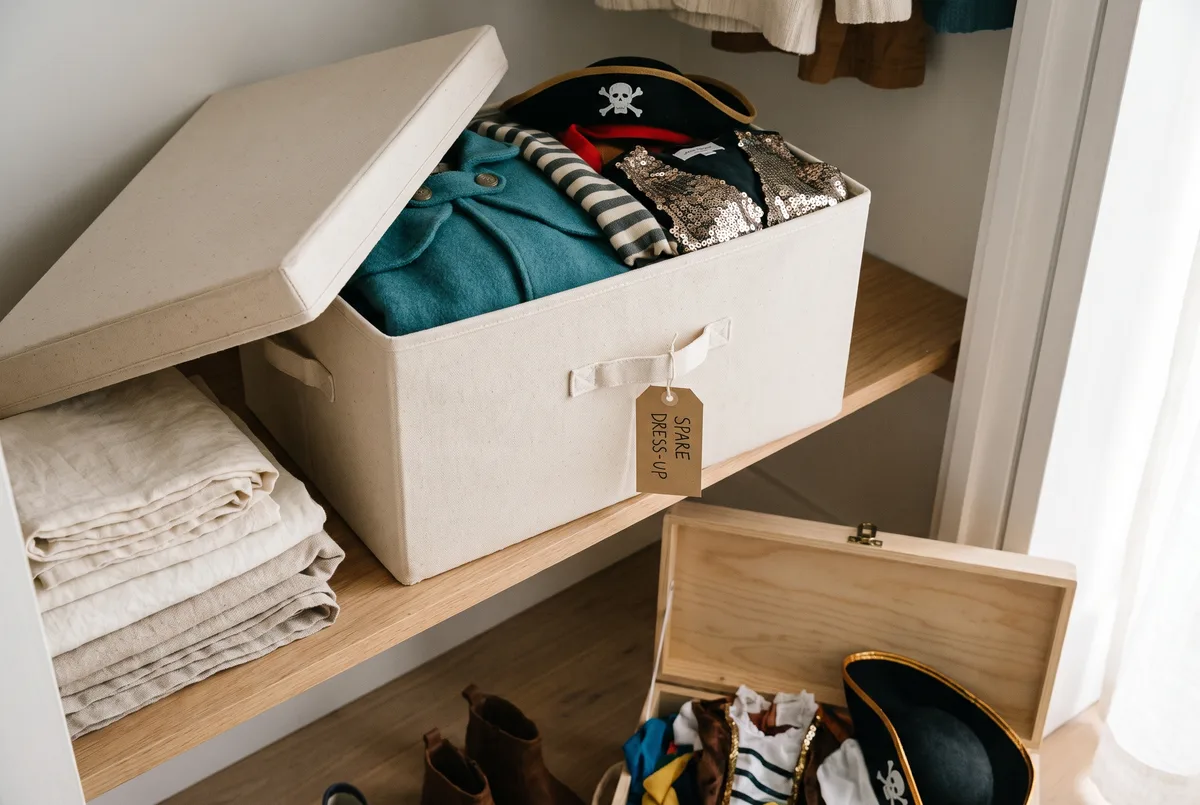 The reserve box does the organizing the trunk cannot. Label it, keep it out of reach, and move three or four pieces each way every few weeks.
What we would skip
A few categories we would not spend on, and the mechanism that kills each one.
Full character costumes bought with no event attached. These fail for a structural reason rather than a quality one: the costume can only be the character it depicts, so its play value is spent the moment the novelty is. If your child asks for one, that is a perfectly good reason to buy it — just buy it as an event purchase, not as trunk infrastructure, and expect it to move to the reserve box afterward.
Hard plastic costume shoes. The sole is the problem. Injection-moulded plastic has almost no grip on wood or laminate, so the child either takes them off or slides, and dress-up is played at speed. Heels compound it by shortening the stride on stairs.
Sequinned tulle and glued-on gems. Watch the seams after one wash. Adhesive-set gems release in warm water, and sequin trim sheds strands that end up wrapped around the rest of the trunk. Anything decorated with glue rather than stitching is a one-season piece sold at multi-season prices.
Anything an adult must fasten. Back zips, neck ties, and rear hook-and-eye closures mean the costume is only wearable when someone is free to help, which on an ordinary Tuesday is rarely. Front closures and pull-on shapes get worn several times as often for exactly this reason.
Bundle "dress-up sets." The per-item price looks excellent until you separate what is a garment from what is trim. A fifteen-piece set is often four wearable items plus eleven bracelets, clip-on bows, and plastic rings — and the trim is precisely the small-parts category you will be screening out of a toddler's trunk anyway.
The three questions
A working trunk answers three questions without adult help: What can I be? Where is the piece I need? Where does it go when I am done?
If your child can answer all three, the trunk is doing its job, and the size of the collection genuinely does not matter. If they cannot answer the second or third, the fix is nearly always fewer pieces and a lower container — not more storage, and not a better system.
Buy less than you think. Favor pieces that can mean more than one thing. Keep the safety pass in the routine rather than saving it for Halloween. A small, well-edited trunk will out-play a crowded one every time, and it will still be in use when the boxed costumes have gone.