Accessories do more work per pound than costumes
The garments in a dress-up collection get the attention and the budget. The accessories get the play.
There is a reason for that. A costume tells a child who they are, which is a single piece of information and one they usually already know. An accessory answers a different and more generative question: what am I doing? A bag means going somewhere. An apron means making something. A clipboard means checking on things. Each of those opens a scenario rather than closing one, and scenarios are what sustain play past the first five minutes.
Accessories are also the cheapest part of the collection, the easiest to make, and the easiest to store. If you are building a dress-up box on a budget, this is where to spend first and spend most.
The test to apply before buying
One question, and it filters out most of what is sold: can this mean more than one thing?
A wooden spoon is a cook, a conductor, a wizard, a builder, and a drummer. A branded accessory moulded into a specific character's shape is that character, and it is that character until it is broken or outgrown. Both cost money; only one keeps earning.
A second, more practical filter: can the child put it on and take it off alone? Anything requiring an adult gets used only when an adult is free, which cuts its actual usage by most of the week.
And a third for younger households: does it pass the small-parts check? For anything a child under three can reach, if a component drops through an empty cardboard tube it does not belong in the box.
The accessories that earn their place
Four groups, and a collection with something from each covers a remarkable amount of ground.
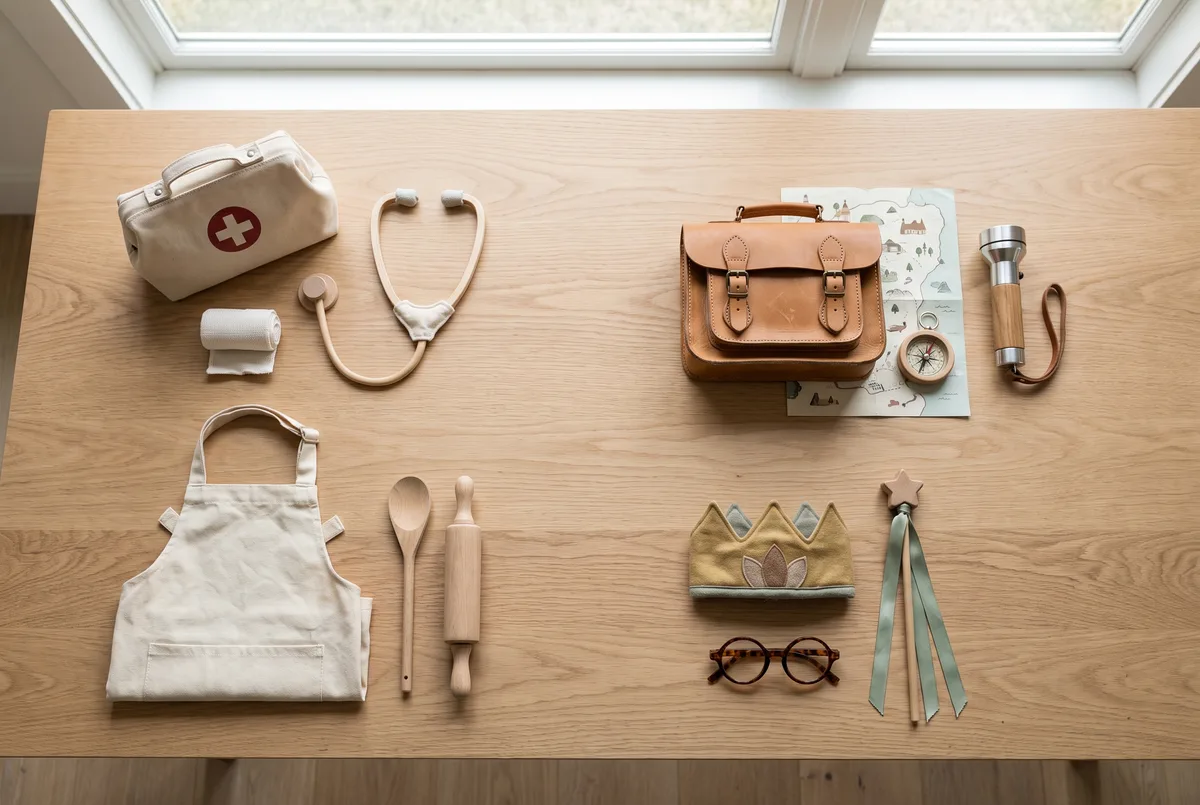
Carrying things. A satchel, a basket, a small backpack, a drawstring pouch. Consistently among the most-used items in any dress-up collection and almost never on anyone's list. A bag creates a journey, gives a child somewhere to put treasures, and turns any outfit into someone with a purpose.
Making and doing. An apron, a wooden spoon, a clipboard, a toy tool, a rolling pin. These carry all the domestic and working roles children spend most of their pretend time on — shop, café, hospital, garage, building site.
Looking and finding. Pretend glasses, a magnifier, a torch, a map, a compass. Underrated and excellent. A torch alone will run an entire afternoon of expeditions under the dining table.
Signalling status. A soft crown, a badge, a sash, a medal, a wand. These are the fastest character changes available — one second to put on, instantly readable.
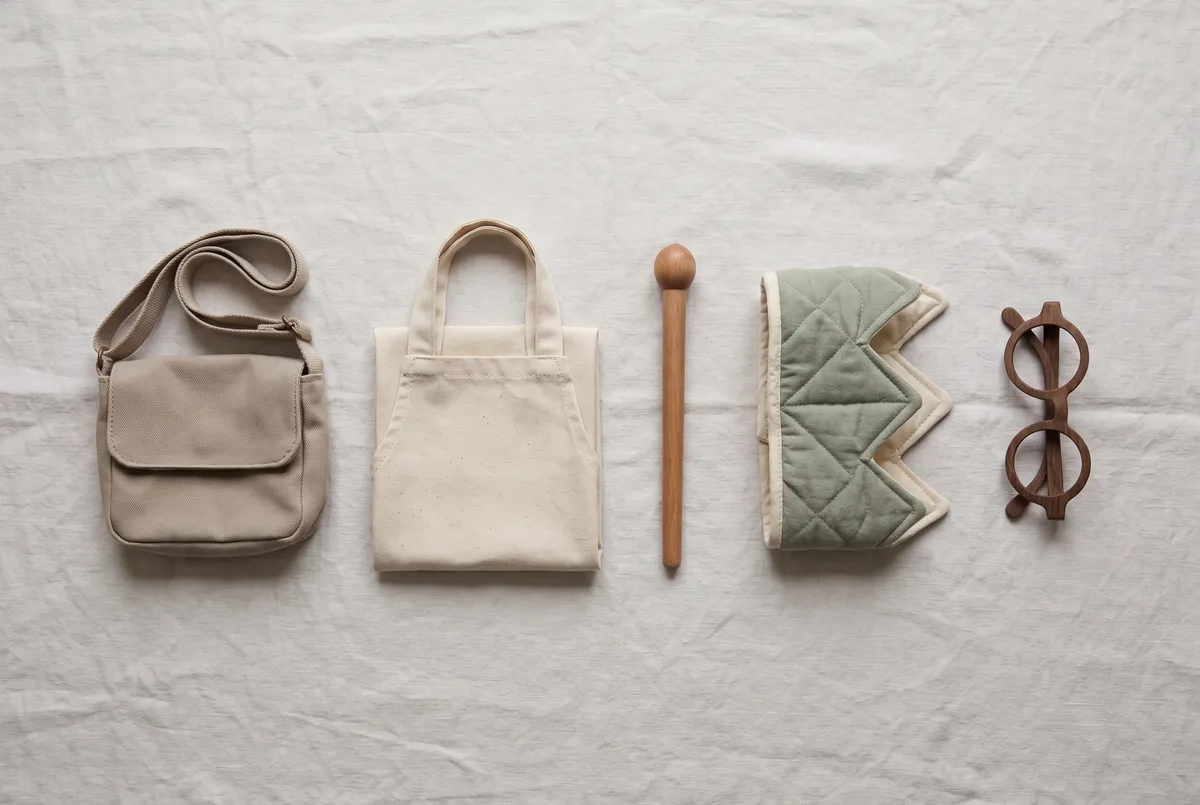 The five to buy first. One from each group plus a bag, which between them will carry most of what a child under six invents.
What to look for in the object itself
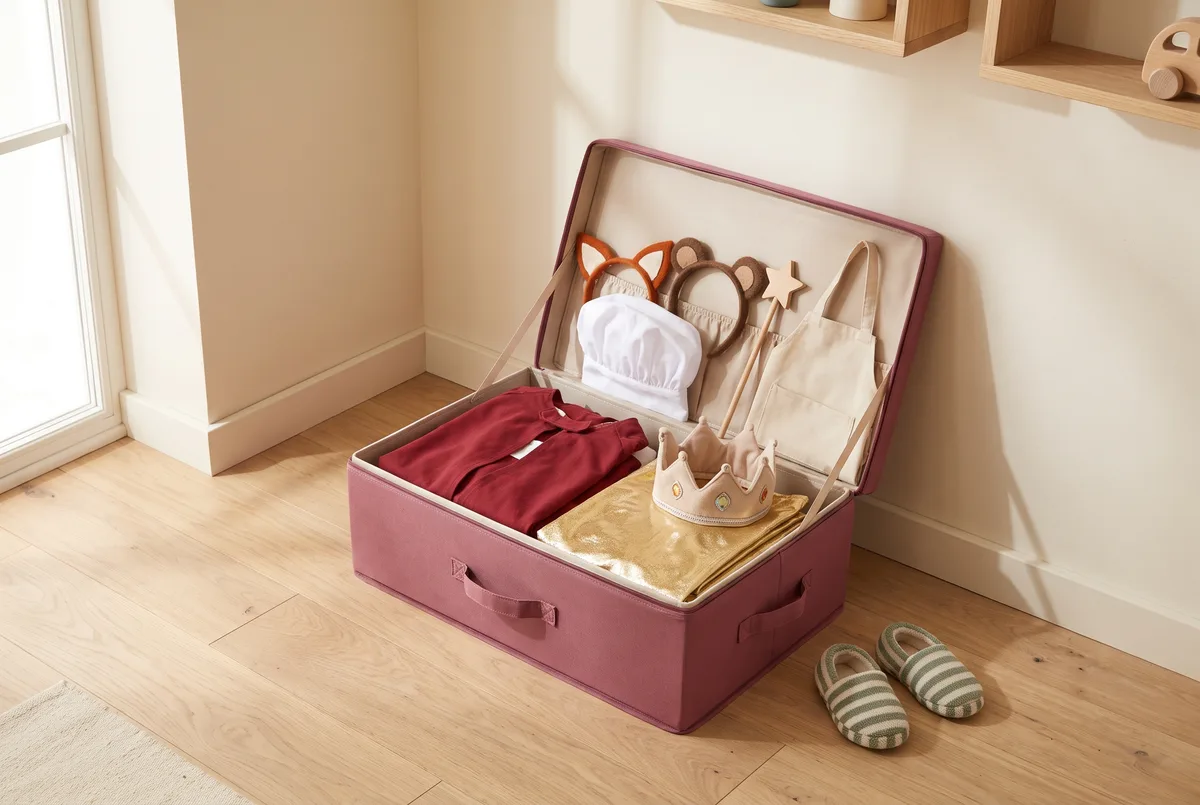
Soft over rigid. Soft crowns, fabric hats, and knit ears survive being sat on, slept on, and stuffed into bags. Rigid plastic equivalents crack, and a cracked plastic edge is sharp.
Washable. Accessories go outside, into sandpits, and through meals. Anything hand-wash-only is functionally decorative.
Stitched, not glued. This is the single most useful thing to check on a product photograph. Glued-on gems and appliqués release in warm water — which turns a decorative item into loose small parts in one wash. Stitched decoration lasts.
Wide, padded bands on anything worn on the head. Narrow bands with combs or teeth are the most-abandoned accessory category there is.
Screw-shut battery compartments on anything that lights up. If the door opens without a screwdriver, leave it — swallowed coin cells cause severe burns within hours, and there is more detail in our kids costume safety checklist.
What reliably becomes clutter
Said plainly, because these are the categories that fill a box without adding play.
Multi-piece plastic accessory sets. The fifteen-piece bundle is usually three usable items and twelve pieces of trim — clip-on earrings, plastic rings, tiny bracelets. The trim is also exactly the small-parts category you want out of a toddler's reach.
Anything with a mask. Blocked vision and restricted breathing, removed within minutes, then stored forever.
Long beaded necklaces. A genuine hazard around the neck for younger children, and they break and scatter.
Themed accessory sets tied to one story. They can be a lovely gift and a bad piece of infrastructure. Buy them as a present if a child wants one; do not count them as building the collection.
Novelty light-up items with sealed-in batteries. When the battery dies the item is landfill, and if the compartment is not secure it should not be there in the first place.
Building the set gradually
Buy slowly and let usage tell you what to get next.
Start with one bag, one apron, one wand, one soft crown, and one pair of pretend glasses. That is five items covering all four groups, and it costs very little. Then watch for a month.
What you are watching for is which kind of play recurs. A child who keeps setting up shops needs a till, a notepad, and more bags. A child running a hospital needs bandages and a clipboard. A child on expeditions needs the torch and the map. Buying into an established pattern gets used; buying to create a pattern usually does not.
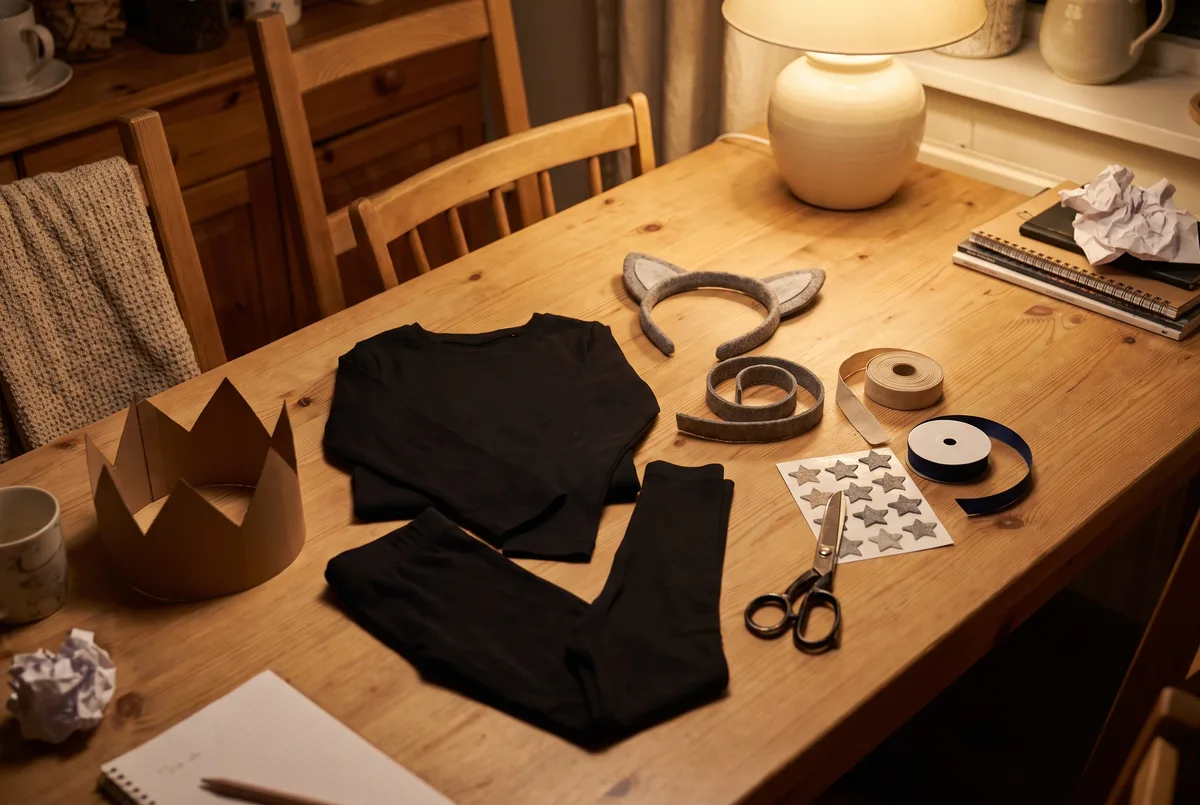
Homemade counts, and often works better. A clipboard with real paper, a lanyard with a laminated badge, a spoon from the kitchen drawer — children treat real objects as more convincing than toy versions of the same thing, which is a useful and money-saving observation.
Storage, because accessories are the mess
Small items cause most of the visible clutter in a dress-up area, for a purely physical reason: they are small enough to fall through everything else and awkward enough not to stack.
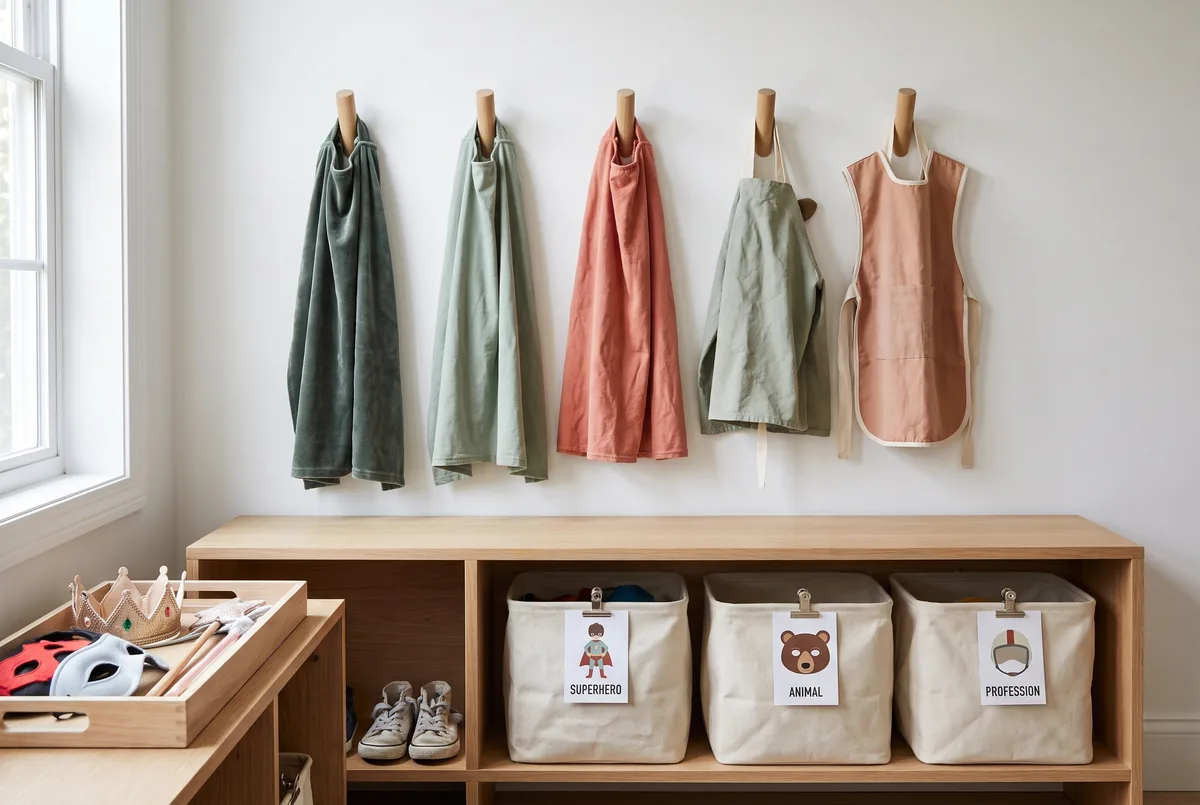
One shallow, open tray at reaching height. Shallow so nothing gets buried, open so no lid gets left off, reachable so it gets used without asking. This is the highest-return few pounds in the whole collection.
Group loosely — heads, hands, bags, everything else. Three or four groupings work; nine turn tidying into a sorting exercise nobody completes.
Reset it after play rather than weekly. An accessory tray that is tipped out and never re-sorted stops being a tray and becomes a small bin.
When to let something go
Accessories break quietly and get kept anyway.
Retire anything with shed trim, a cracked rigid edge, a failed closure, or a battery door that no longer holds shut. Retire anything that has not been chosen across two or three rotation cycles. And retire anything that only works with a garment the child has outgrown.
What is left after that pass is the working set — usually smaller than expected and used far more heavily than the pile it came from. A dozen good accessories will out-play forty mediocre ones, and they fit in one tray.