Choose for stamina, not for the photograph
Halloween costumes are chosen in daylight, in a warm house, from a picture. They are worn in the dark, in the cold, at the end of a long day, while walking further than usual.
That gap explains almost every Halloween costume that gets abandoned on a doorstep. The costume was not badly made — it was chosen against the wrong specification. The useful question is not what does my child want to be, which they will tell you anyway, but what version of that will still be working ninety minutes in.
Age is the best proxy for stamina, so that is how this guide is organised.
Toddlers, roughly one to three
The whole event is new, the walking is still developing, and the tolerance for anything scratchy or restrictive is close to zero.
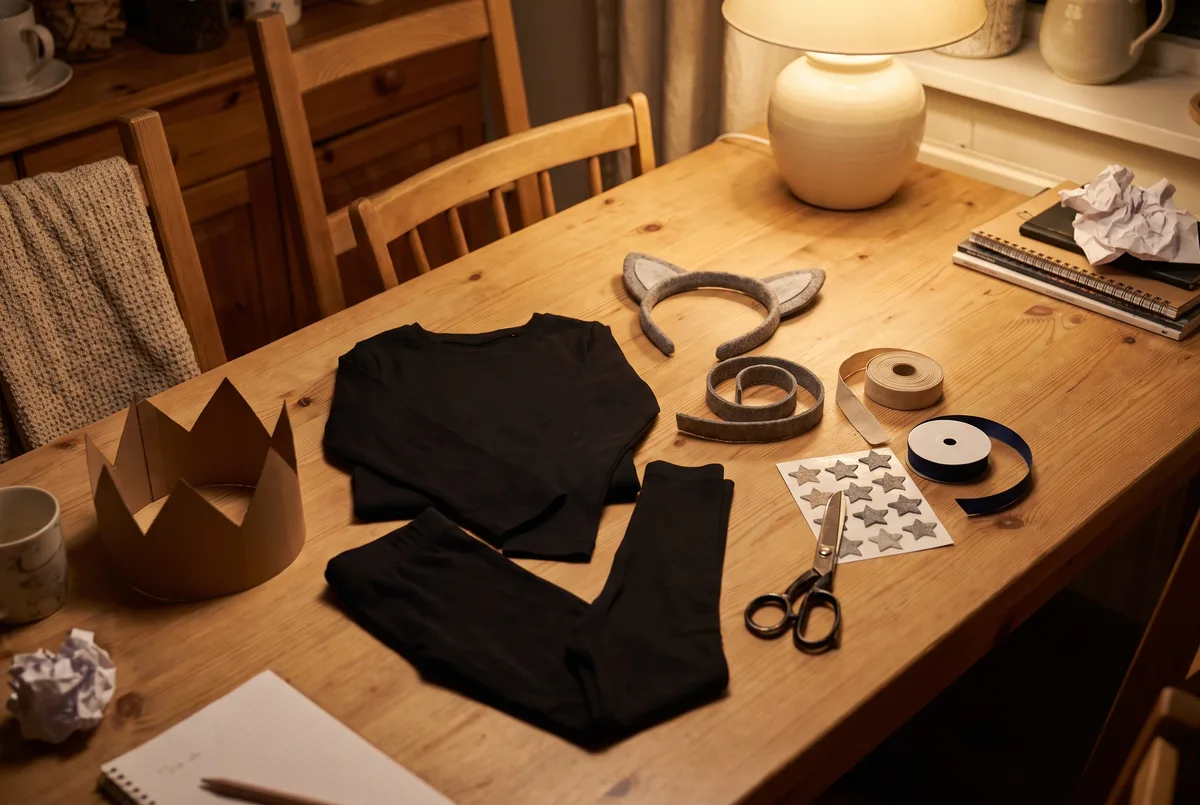
What works: soft pull-on shapes in a single strong colour. A pumpkin in an orange jumper and knit hat. An animal in a matching-colour outfit with knit ears. A star or a cloud in grey or gold. A tiny explorer in ordinary warm clothes with a satchel. All of these read instantly and none of them fight the child.
What to skip: masks of any kind, hoods that restrict hearing near roads, long capes, tails that trail, and anything with detachable trim. At this age the small-parts screen matters most — if a piece drops through a cardboard tube, it comes off the costume.
Realistic expectation: a toddler will visit a handful of houses and be finished. Plan the route accordingly, and treat anything beyond that as a bonus rather than the plan.
Preschoolers, roughly three to five
This is the peak enthusiasm age. The child has a specific idea, is verbal about it, and has genuinely limited patience for discomfort.
What works: one strong signal on comfortable clothes — a cape, a hat, ears, a tabard. Character-specific is fine at this age, provided the character survives being made out of a jumper. Let them choose; the investment in the choice is a large part of what keeps the costume on.
What to skip: back fastenings, anything requiring adult help to remove, and full masks. The bathroom is the deciding constraint here — a costume a four-year-old cannot manage alone will be removed entirely at the first stop, and frequently not put back on.
The check worth running: have them sit, climb three stairs, and put a coat on over the top before the night.
Elementary, roughly five to eight
Accuracy starts to matter to the child, and they will notice and mind if the costume is approximate. They also have the stamina for a longer walk and the dexterity for more complicated pieces.
What works: more detail, more specificity, and more of their own input into the making. This is the age where a child will happily spend an afternoon building a cardboard element themselves, and where the costume becomes a project rather than a purchase.
What to skip: anything that must be carried. A staff, sword, basket, or lantern occupies a hand needed for balance and for holding yours near a road, and it will be put down within the hour regardless.
Worth knowing: by seven or eight, many children shift from wearing costumes to making them. If that has happened, the useful gift is materials rather than an outfit.
Group and family costumes
Group costumes fail when they require everyone to comply, and work when they are held together loosely.
A colour is the easiest binding agent — everyone in one shade, with each person interpreting it however they like. A category works nearly as well: everyone is a bird, or a weather event, or a kind of food. Both allow a child to opt out of the specific idea without dismantling the whole thing.
Avoid schemes where one person's costume only makes sense in combination. The child who is "the left half of the horse" has a bad evening, and the child who changes their mind on the day breaks everyone else's costume.
Layering, which is the actual Halloween problem
In most of the northern hemisphere, Halloween evening is cold. The costume was designed in a shop with no coat in mind. These two facts collide at about six o'clock.
Decide the order in advance. There are only three workable options:
Costume over the coat. Works for capes, tabards, ponchos, and anything that pulls on over the top. Buy or make a size up so it fits over the outer layer. This is the most reliable choice.
Costume under the coat, signal above the neck. Works when the character is carried by a hat, ears, face paint, or a hood — none of which a coat can cover. A jacket in a colour that suits the costume helps here.
Warmth under the costume. Thermal base layers and warm leggings under a tunic or dress. Good down to a point, but it is not a substitute for a coat in genuinely cold weather.
The option that does not work is a costume built around shoulder details or wings with a coat added at the last minute — the coat either flattens the costume or the costume is abandoned to wear the coat.
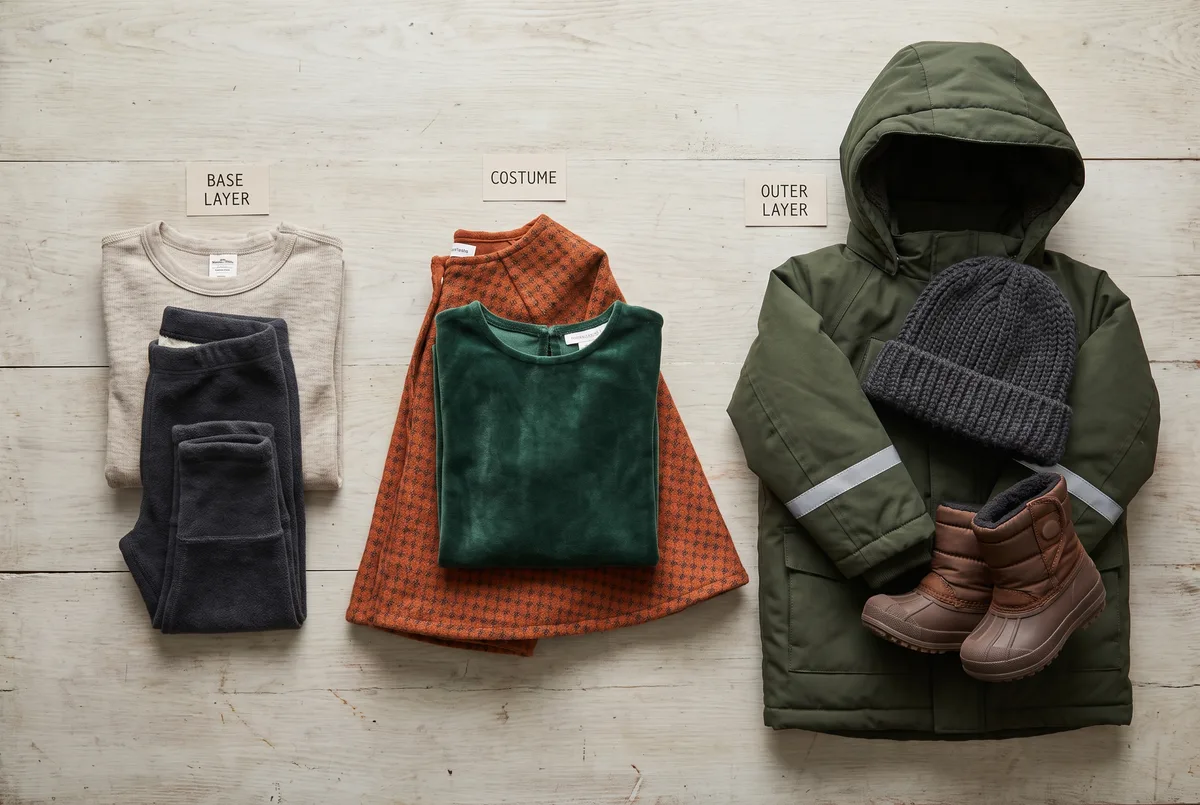 Decide the order before the night, not at the door. Base, costume, outer layer — with the reflective element on whatever ends up outermost.
Being seen after dark
Dark costumes are close to invisible to a driver at dusk, and this is the highest-stakes item on the page.
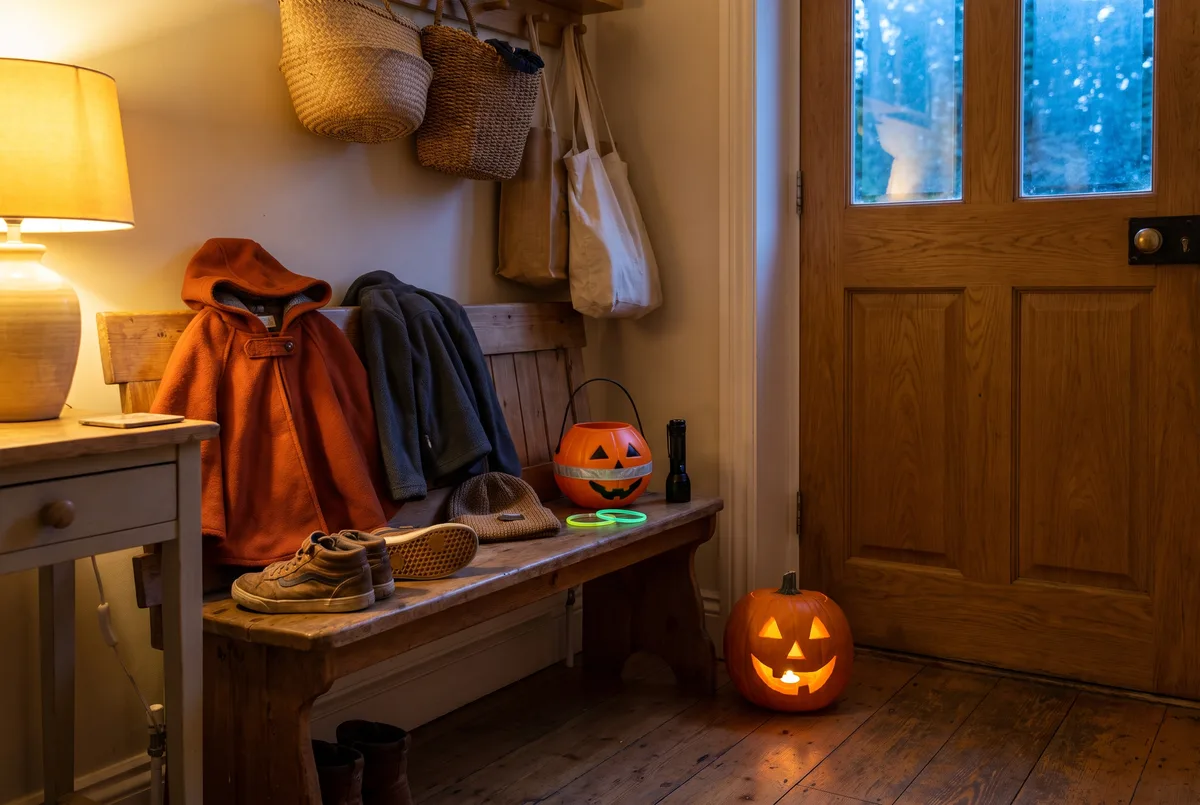
Retroreflective tape is the thing that actually works, because it returns headlight beams straight back to the driver rather than scattering them. Put it on whatever layer is outermost — the back of the coat, the treat bucket, and the heels of the shoes. A strip on the bucket alone is worth more than nothing but the bucket swings and faces the wrong way half the time.
Glow sticks and light-up accessories help children see each other and help you track them in a group, but they emit far too little light to make a child visible to a car at distance. Treat them as supplementary rather than as the solution.
A small torch does two jobs: it lights the path and it makes the group readable. Give it to the child who most wants a job.
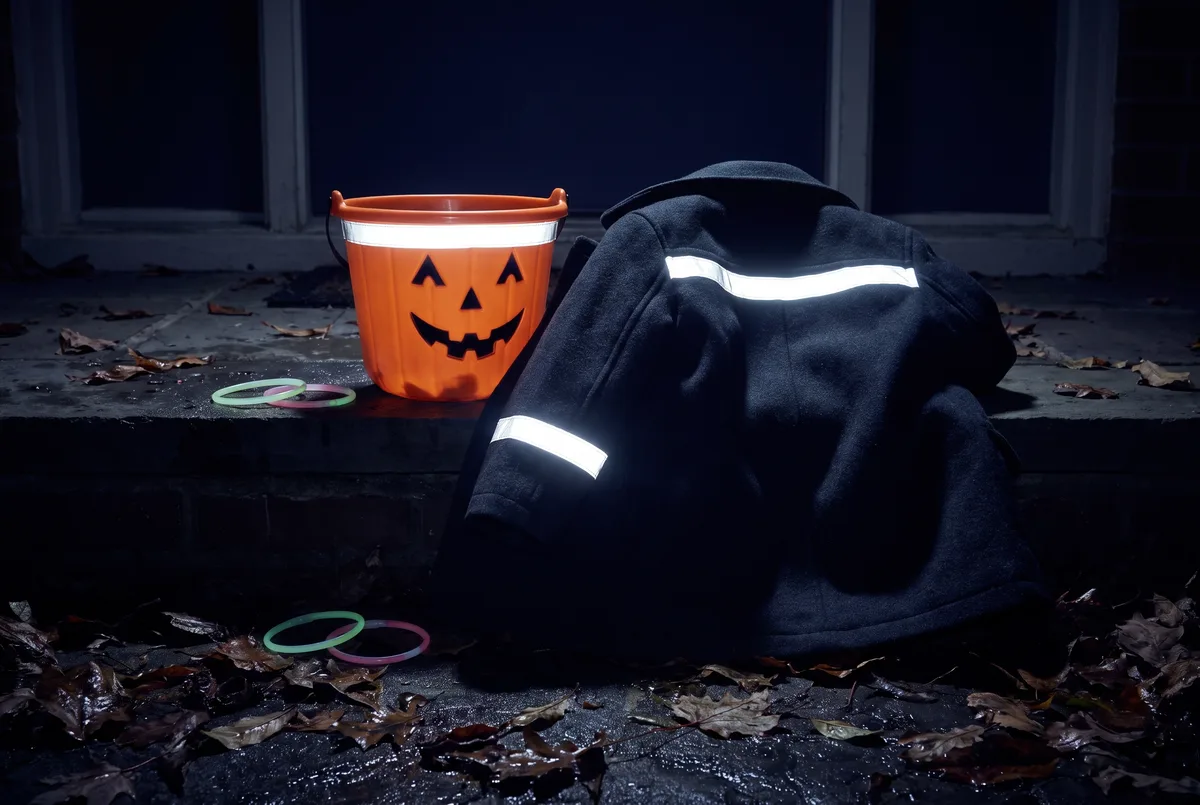 The same photograph shows why these are not interchangeable. Retroreflective tape sends a driver's headlights straight back at them; glow bracelets are for seeing each other.
And walk the route in daylight if it is unfamiliar. Kerbs, driveways, and unlit paths behave differently when a hem is dragging and everyone is excited.
Flame, which is the seasonal risk
The one hazard genuinely specific to this night is open flame at ankle height. Carved pumpkins with real candles sit on doorsteps and paths, at exactly the height a cape or a tulle skirt passes.
Costume fabric is frequently lightweight polyester or nylon, which ignites readily. Use battery LED tea lights in your own pumpkins, keep loose layers clear of other people's, and look for a "flame resistant" label where one exists — noting that flame resistant means resists ignition and self-extinguishes, which buys time rather than removing the risk.
Carry one backup
The single most useful thing in your pocket is a spare accessory that changes the character without rebuilding it.
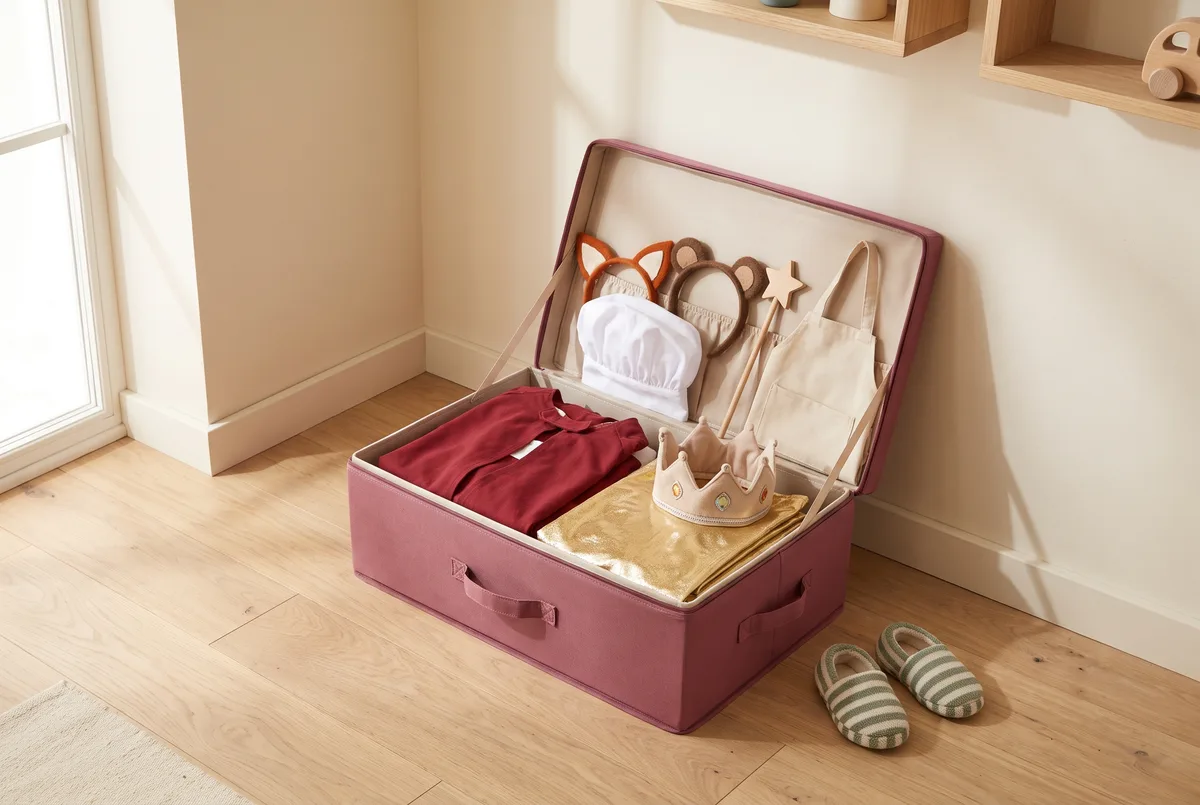
A headband, a hat, a badge, or a small cape folded into a bag covers three scenarios: the costume becomes uncomfortable and has to come off, a piece breaks or is lost, or the child simply changes their mind — which at four is not a crisis but is very likely.
The backup works because it lets the evening continue as something rather than ending. A child who has abandoned a wizard hat but still has a cape is still dressed up. A child whose entire costume depended on one item is finished for the night.
Pack it before you leave, along with a plaster or two, and treat the whole thing as a system with a fallback rather than a single costume that has to survive intact. That is a much lower bar to clear, and it is the difference between a good evening and a short one.