Three zones and nothing else
Unicorn is the theme most likely to tip into overspending, because the shops make it easy and the aesthetic is genuinely appealing to adults. It is worth deciding the shape before looking at anything for sale.
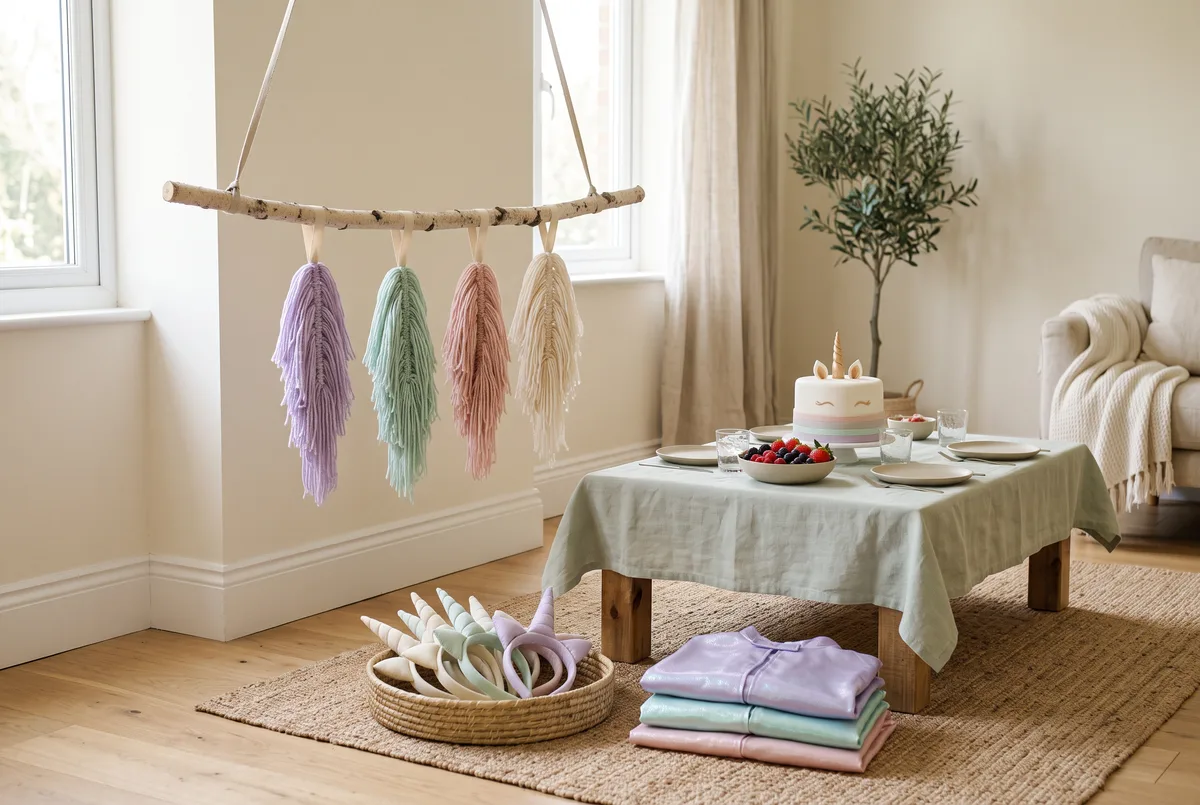
Three zones covers a whole party. An accessory station where guests are given the one thing they wear. A craft table, used once, early. And open floor, kept clear, for the part where they need to move. Everything else — the food, the cake, the goodbyes — fits around those.
What this avoids is the most common failure at this particular theme: a party with six activities, four of them elaborate, none of them finished, and a birthday child who is overwhelmed by the middle of it.
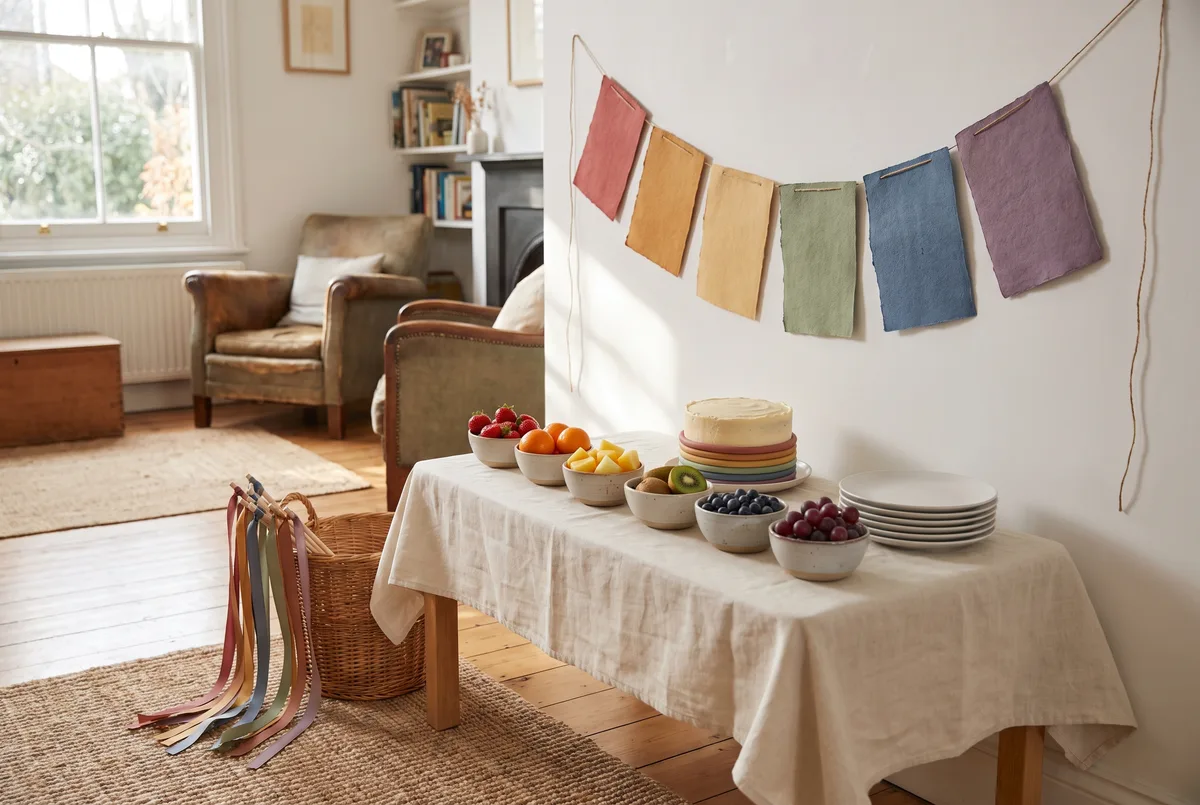
 Zones with space between them. Guests serve themselves from a station laid out like this, which takes an adult out of the busiest ten minutes of the party.
One accessory, handed over at the door
Do not costume every guest. Sizing is impossible, cost multiplies, and children who arrive in their own outfit will not change.
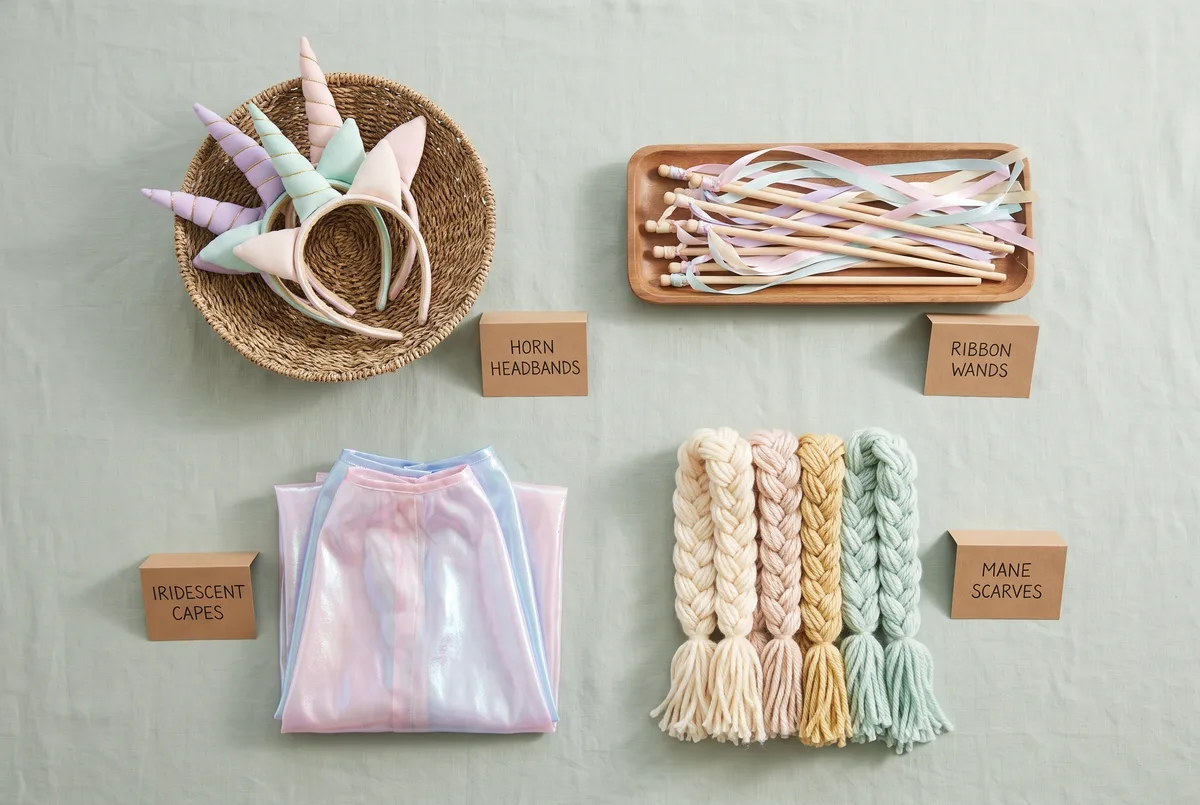
One wearable thing per child, given as they arrive: a padded horn headband, a pastel cape, a ribbon wand, or a mane scarf. It solves the awkward first ten minutes, makes the group photograph work, and goes home as the favour — which means you are not buying favours twice.
Set them out as a station rather than handing them over individually. Shallow bins, one type per bin, and a mirror at child height. The mirror matters more than it sounds; for a lot of four-year-olds, seeing the horn on is the moment the party actually starts.
On the headbands specifically: choose padded bands with no combs or teeth, and short horns. The tall rigid glittery ones photograph well and are off within ten minutes — there is more on judging these in our unicorn costume guide. Buy for the number invited plus two, because running out with two guests unserved is the only genuine disaster on the list.
Avoiding the costume contest
Dress-up parties can quietly become a competition, and unicorn is more prone to it than most because elaborate versions are widely available.
Two things prevent it. Provide the accessory yourself, so every child has the same one regardless of what they arrived in. And word the invitation loosely — "wear anything pastel, or just come as you are" removes the pressure entirely and means no family feels obliged to buy.
Widening the theme also helps. Framing it as magical, rainbow, or enchanted dress-up rather than strictly unicorn lets a guest arrive as a dragon, a fairy, a horse, or a wizard without negotiating. Stock the station accordingly: alongside the horns and manes, put out a couple of plain capes and some ribbon wands. The party looks identical and rather more children arrive happy.
Put the craft first
The ordering mistake nearly everyone makes.
Run the seated craft before the active game, while guests are still settling and slightly shy. It occupies the arrival gap, gets everyone talking, and they are willing to concentrate. Once a group of preschoolers has been running around, getting them back into chairs to glue things is genuinely difficult and the craft ends up abandoned half-finished.
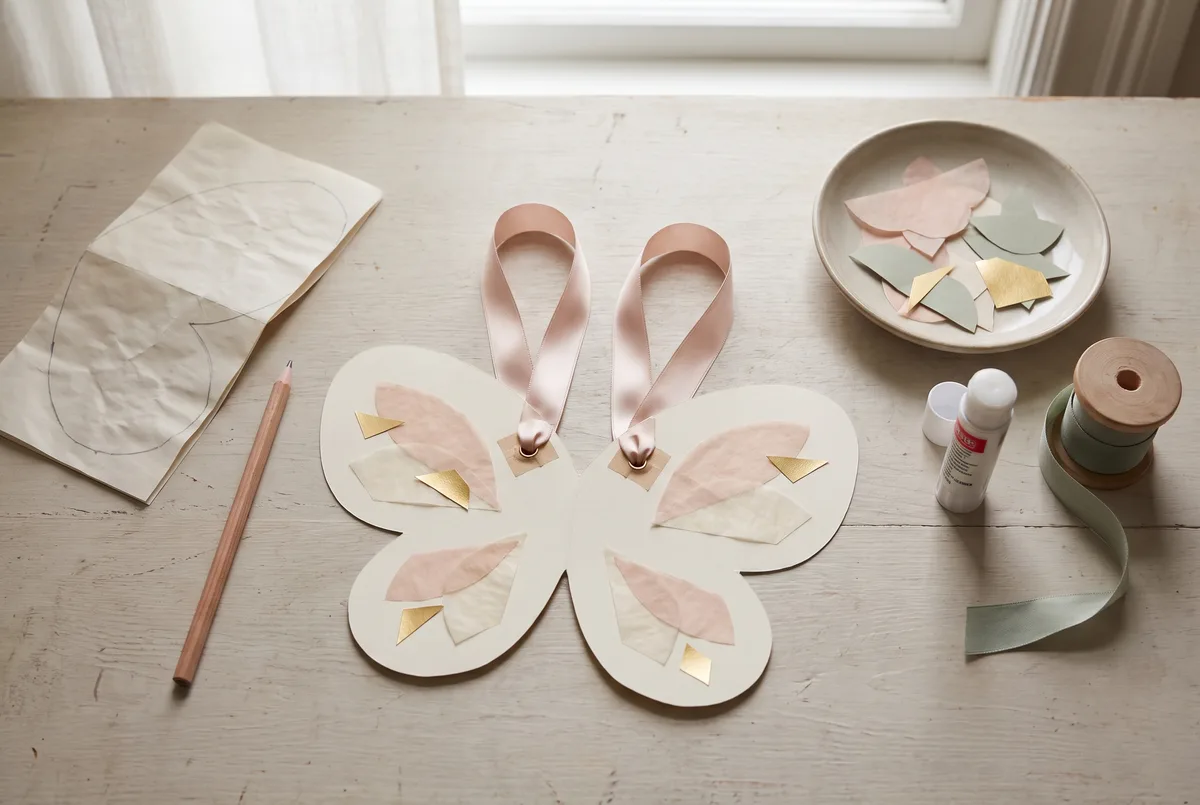
Pick one craft, finishable in about fifteen minutes. Decorating a pre-cut horn, adding paper shapes and stickers to a plain wand, or threading a ribbon bracelet all work well.
Pre-cut everything. Scissors at a party create a queue and put one adult on cutting duty for twenty minutes. Glue sticks over liquid glue. Nothing that needs to dry longer than the party lasts, or you are handing wet crafts to parents at pickup.
And write names on crafts as they are finished, not at the end. Ten minutes later nobody remembers whose wand has the blue ribbon, including its maker.
One active game, with an ending
After the craft, they need to move. One game is enough.
The theme matters far less than the movement, so unicorn-flavoured versions of the standards are fine — a hunt for paper stars or horns hidden around the room, freeze-dancing, or a gentle relay.
What matters is a defined ending. Hide a fixed number of horns and announce the number, so the hunt finishes when they are found. Play three rounds of freeze-dance and say so. Games that run until children get bored end badly; a stated stopping point is what prevents the slide into the overtired stretch.
Palette, and where the money goes
Three muted pastels and one metallic. Lavender, mint, blush, cream, pale blue — pick three — plus soft gold. Repeat them across the table, the accessories, and the craft materials. Repetition is what makes a party look planned; volume is what makes it look expensive, and only one of those is necessary.
Worth spending on: the accessories. They are the theme, the ice-breaker, the photograph, and the favour in one line item.
Not worth spending on: themed tableware, which looks worse in photographs than plain plates in your palette; elaborate food, because four-year-olds eat very little at parties; and a backdrop, which is the highest-cost, shortest-lived element of a small children's party.
If the budget is tight, cut in this order: decorations, then food elaboration, then favours, then guest numbers. Cut the accessories last — they are the party.
Sparkle, carefully. Metallic paper, foil, and glitter card give the effect. Loose glitter gives the effect and then lives in the carpet until spring; it is the one material we would refuse outright at a preschool party.
Two hours, and the signal to wind down
Two hours is the honest ceiling for three- to six-year-olds. Ninety minutes is frequently better.
Rough order: arrivals and accessory station for the first twenty minutes; craft for twenty; active game for twenty-five; food then cake; then a free-play block in costume; then goodbyes with named crafts handed out.
That free-play block near the end is the most useful twenty minutes in the plan and the one most often left out. It requires nothing from adults, absorbs whatever ran long earlier, and is frequently the part children remember — the horn is on, the pressure is off, and they are simply playing.
Watch for the group fragmenting — two children drifting to a corner, one going to find a parent, one starting to take the accessory off. That scattering usually arrives about fifteen minutes before the first real upset, and it is the cue to move to food or to the quiet end of the plan rather than to start something new.
Cleanup and what comes home
Keep one basket beside the party area for accessories, and make returning things to it the last mission. Children are surprisingly willing when it is framed as a task with an end.
Set up a named spot for finished crafts before anyone arrives — a shelf, a windowsill, or paper bags with names. Handmade crafts vanish at pickup otherwise.
Because the arrival accessory doubles as the favour, the take-home bag can stay nearly empty. The horn, the cape, and whatever they made is already generous. If you want to add one thing, add something that lasts rather than a handful of small plastic items gone by the weekend.
Afterwards, put the reusable pieces into the everyday dress-up collection rather than a party box. The iridescent capes, the ribbon wands, and the mane scarves get worn through the winter as fairies, dragons, water, and weather — which is a much better return than storing them for a theme that may not come round again.