Let the group be the rainbow
The instinct at a rainbow party is to put every colour on every child. It is the wrong way round, and it causes most of the problems that follow — outfits that are hard to assemble, expensive to buy, busy in photographs, and useless afterwards.
Assign one colour per guest instead. Each child wears their own clothes in that colour, and the rainbow only exists when they stand together. This is better on every measure that matters: no family has to buy anything, every child is comfortable in familiar clothes, the group photograph is genuinely striking, and nothing is wasted afterwards.
It also removes the quiet competition that dress-up parties can generate. Nobody's outfit is more elaborate than anybody else's, because everyone had exactly one instruction.
If the guest list is smaller than six, double up colours or drop to a four-colour scheme. The effect holds.
Muted beats primary
This is the single decision that most changes how the party looks.
Primary rainbow — pillar-box red, bright yellow, electric blue — is what party shops sell and it is the harder version to pull off. It photographs harshly under indoor light, it clashes with most homes, and families genuinely struggle to find true primary shades in a child's wardrobe.
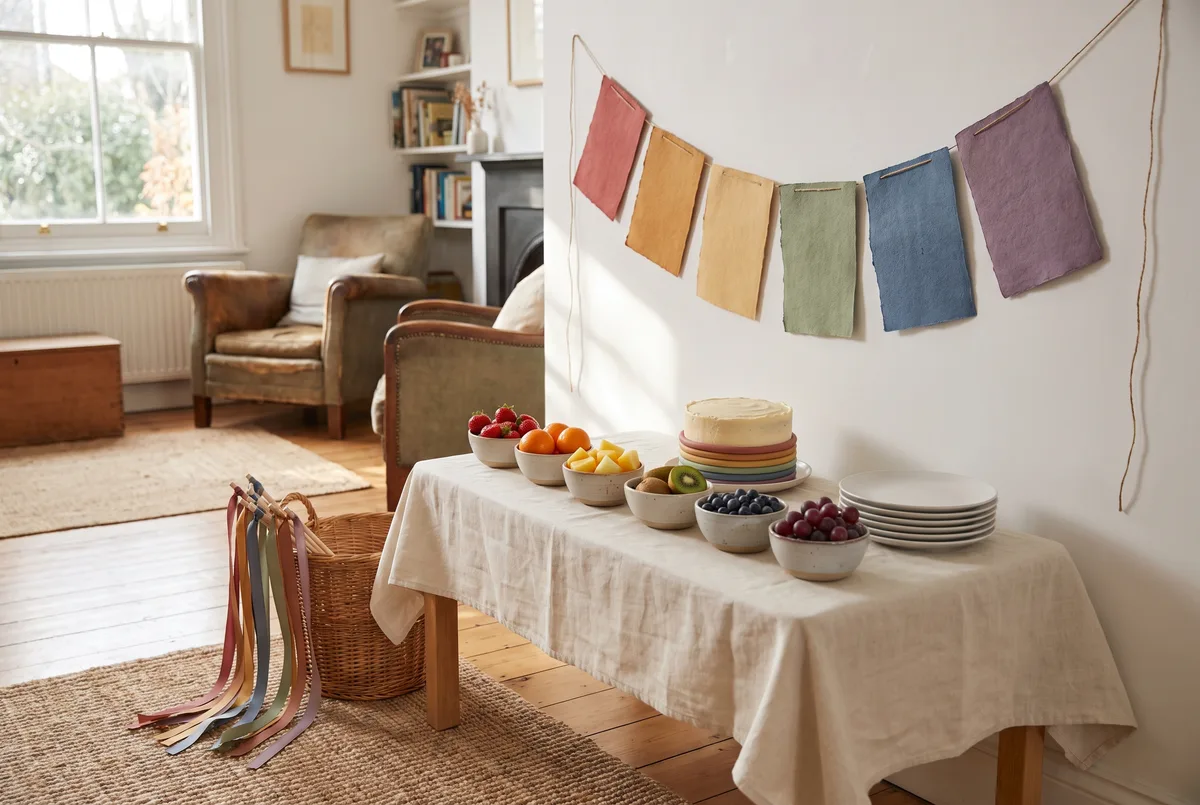
A muted rainbow solves all three. Dusty red, warm amber, soft ochre, sage, denim blue, muted violet. Every one of those is a colour a child probably already owns, they sit comfortably in a normal living room, and they photograph beautifully in daylight.
Say the shade in the invitation rather than the colour name. "Something sage green or olive" gets a far better result than "green", which returns everything from neon to forest.
One base, one rainbow, one sparkle
For the birthday child — or for any child you are dressing specifically — the formula is three parts and no more.
One comfortable base. Clothes they already wear. The base is the thing they are in for three hours, so it is chosen for comfort alone, and it is barely visible in photographs anyway.
One rainbow element. A striped cape, a colour-blocked skirt, a rainbow sash, a set of ribbon streamers on the wrist, or a headband. Just one. This is the piece carrying the theme.
One sparkle accent. Metallic ribbon, a foil star badge, a sequinned headband, a shimmer cape lining. One.
The failure mode is stacking — a rainbow tutu and a rainbow cape and a sequin top and glitter. Each addition subtracts clarity, and the outfit ends up reading as noise. One strong rainbow piece against a plain base reads from across the room; four compete with each other.
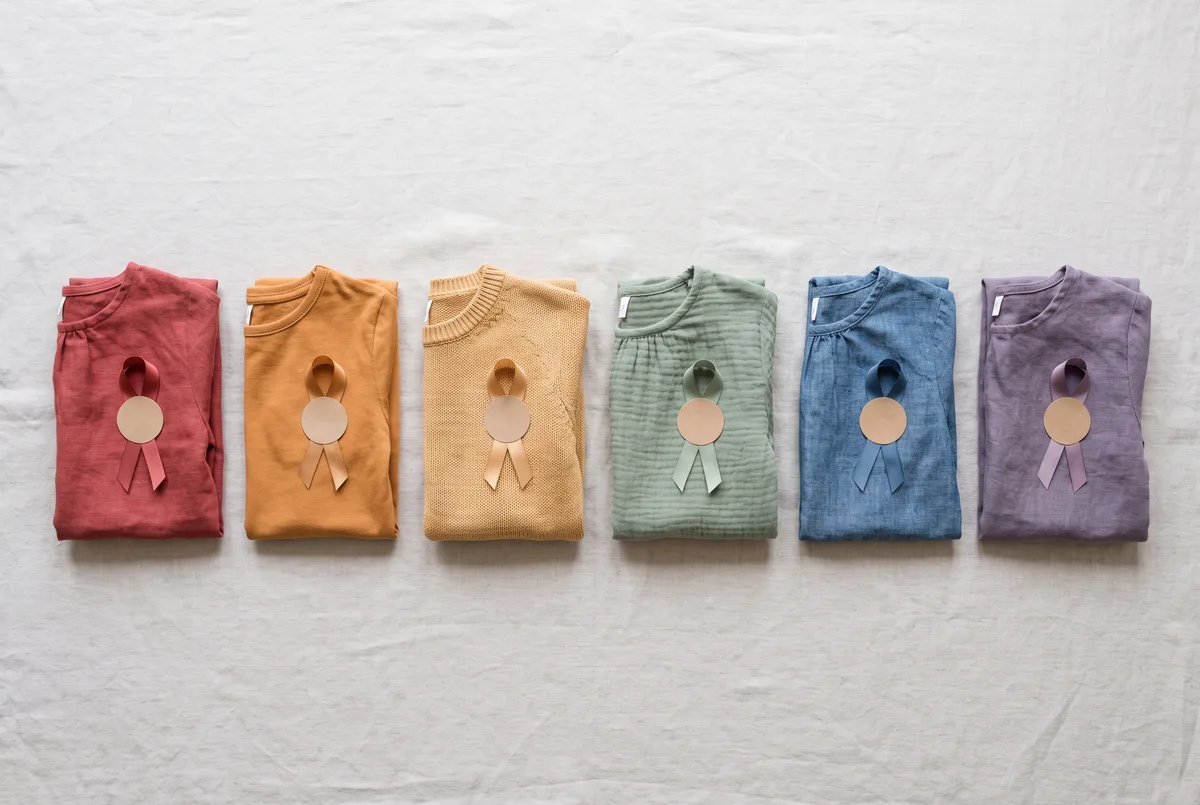 One colour per guest, built from clothes they already own. The ribbon and badge are the only things you provide, and together they cost very little.
Sparkle that does not become a problem
Sparkle is the point of the theme and also the thing most likely to go wrong.
Use: metallic ribbon, foil card, glitter card, sequinned trim that is stitched rather than glued, shimmer fabric, holographic paper.
Avoid: loose glitter, entirely. It gets into eyes and food and stays in a carpet for months. Glitter card gives the identical visual effect with none of the consequences, and this is the one material we would refuse outright at a children's party.
Face glitter, if you want it, must be a cosmetic-grade product made for skin. Craft glitter near eyes is a genuine corneal-scratch risk, and craft glitter is what is usually to hand.
Glued-on gems are the other quiet problem — they release in warm water, so a costume washed once becomes a scattering of small parts. If there are toddlers or younger siblings at the party, that matters.
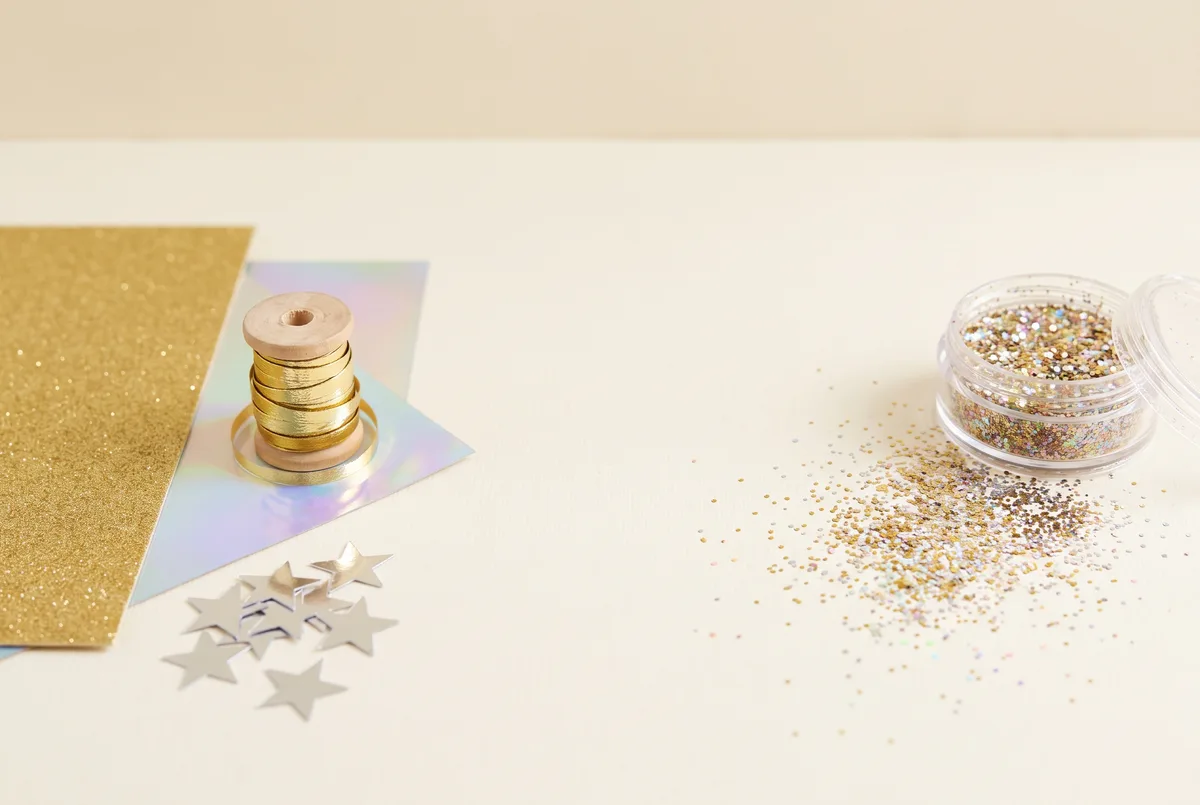 Everything on the left gives the same effect in a photograph. Only the pot on the right is still in the carpet at Easter.
Shoes, and the parts nobody plans
Rainbow parties involve dancing, running, and usually a garden if the weather allows. The outfit needs to survive all of it.
Their own shoes. Costume shoes with moulded plastic soles have almost no grip on wood, laminate, or damp grass. This is the most common injury source at an active children's party and the easiest to avoid.
A layer for temperature. Indoor parties get hot and gardens get cold. A cardigan in the assigned colour solves both and keeps the scheme intact.
Hair off the face if there is dancing or a craft. A simple clip in the assigned colour does double duty.
Something washable. Rainbow parties tend to involve coloured food, and coloured food stains.
Coordinating guests without demanding anything
The invitation wording matters more than the plan.
Ask for "anything in [colour]" — clothes they own, no purchase, no costume. Make it explicit that a plain top in the right colour is perfect, because otherwise at least one family will assume a full outfit is expected and arrive stressed.
Then provide the coordinating piece at the door. A ribbon, a wand, a sash, or a paper badge in each child's colour. This is what turns six children in different clothes into a group, and it is the same trick as an accessory station at any dress-up party: it doubles as the favour, so you are not buying favours twice.
Keep two spare colours for children who arrive in the wrong shade or forgot entirely. Nobody should feel out of place at the door over a colour.
What the outfits become afterwards
The argument for the one-colour approach is partly that it wastes nothing, and it is worth choosing the provided accessory with that in mind.
A ribbon wand goes straight into the dress-up collection and is used for a dozen other things. A plain sash becomes royal, a superhero belt, a martial arts belt, a dressing-gown tie. A cape in a single colour is the most reusable dress-up item there is.
What does not survive is anything printed with the date, the child's name, or "rainbow party" — those are single-use by design. Spend the same money on one plain, well-made accessory instead and it will still be in the trunk next spring.
And because every guest wore their own clothes, there is nothing to dispose of at all — which is quietly the best feature of running the theme this way.