Wizard is mostly silhouette
Of all the characters children ask for, wizard is the cheapest to make convincingly, and the reason is that it is carried almost entirely by outline. A dark shape with a cape reads as wizard from across a room before anyone has registered a single detail.
That is unusually forgiving. It means the costume can be built from clothes already in the house, the detail can be minimal, and the money — if you spend any — goes into one good cape rather than a set of pieces that each do a fraction of the work.
It also means the common failure is over-building. Robes with wide sleeves that drag through lunch, tall hats that hit door frames, and long trailing hems all add authenticity and subtract wearability, and wearability is what decides whether the costume survives to lunchtime.
Start in the wardrobe
The base is the part nobody photographs and the part that determines comfort for the whole day.
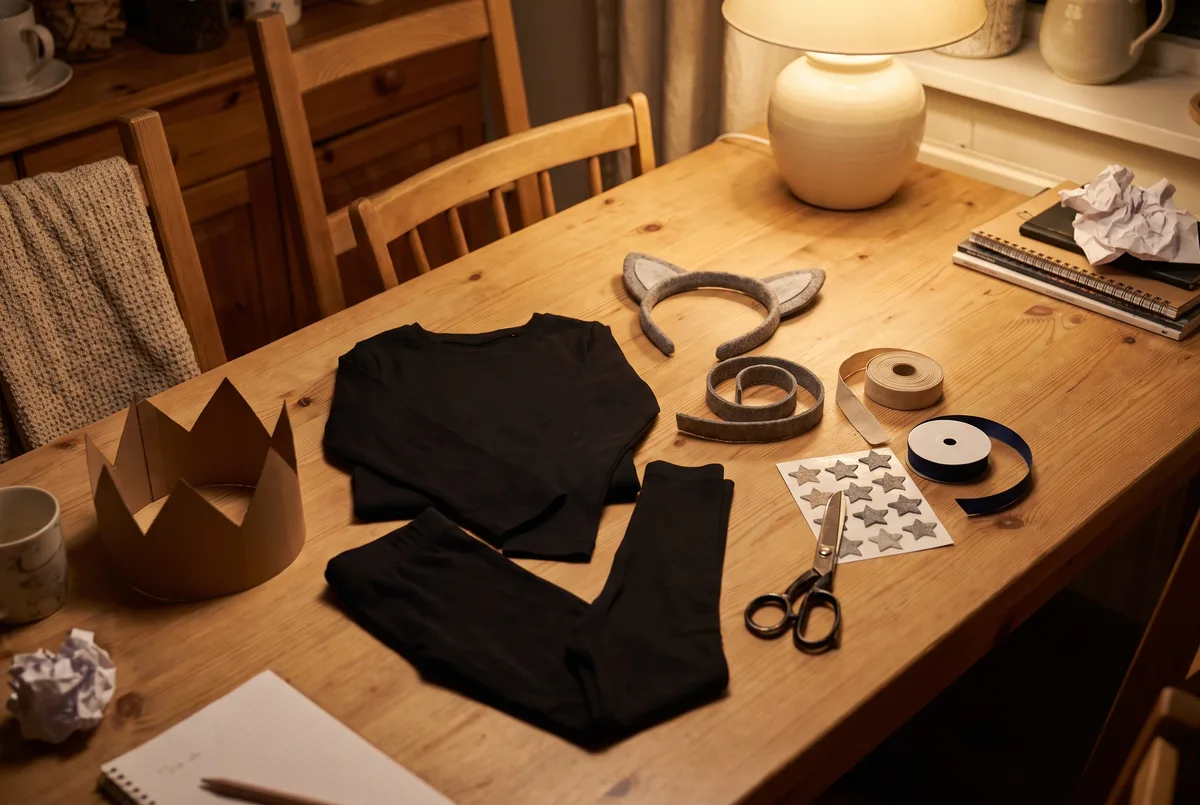
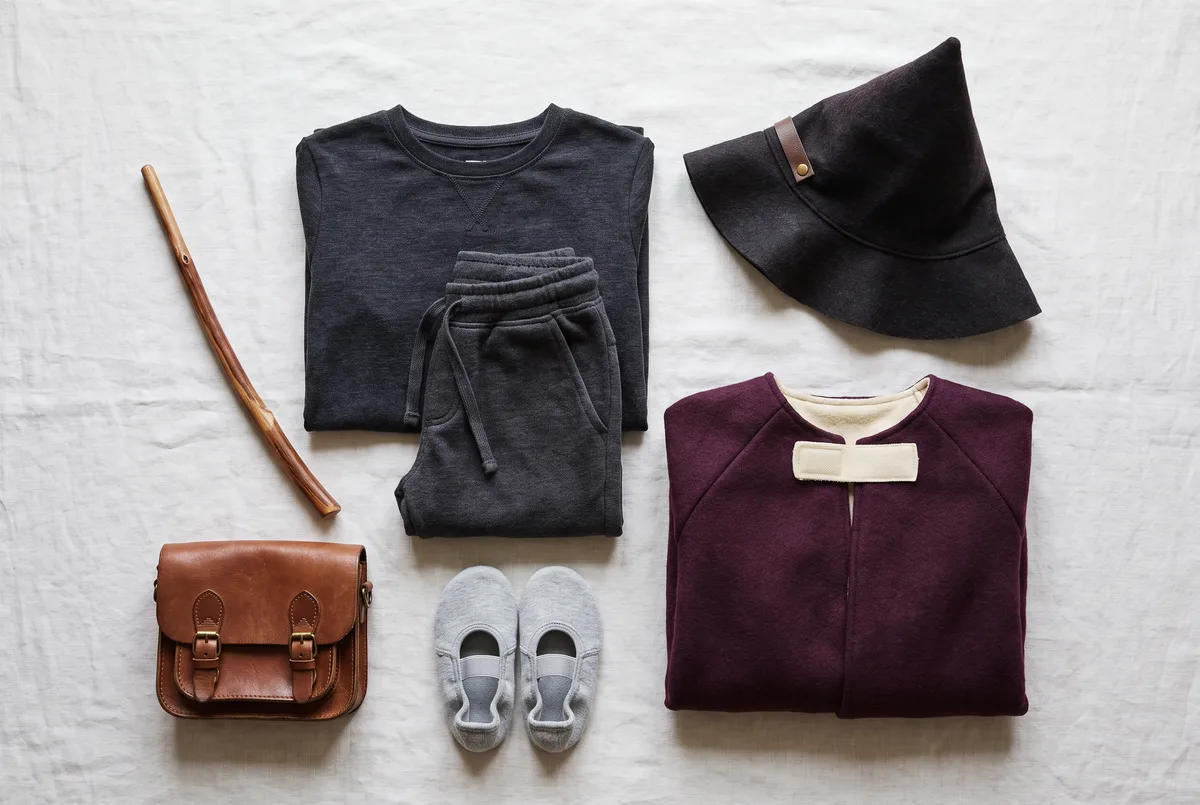
Charcoal, navy, deep plum, or black. Joggers or leggings and a plain long-sleeve top. That is the entire foundation, and most families already own it. Dark colours read as wizard on their own and forgive spilled paint, damp playgrounds, and lunch.
Working from ordinary clothes gives you something a full robe does not: the costume can be partly removed. A child who is too hot, or has had enough, can take the cape off and still be dressed. A child in a single one-piece robe with nothing underneath cannot, which is how costumes end up abandoned in a bag by mid-morning.
Deep green, brown, and rust work too and feel more herbalist or forest wizard, which some children much prefer to the classic version.
The cape, and the one measurement that matters
Length: between hip and mid-calf. Never floor.
This is the single most important number in the guide. A floor-length robe looks correct and is stood on going up stairs, which pulls at the neck and is how a child ends up on the steps. Mid-calf keeps the drama and removes the hazard entirely.
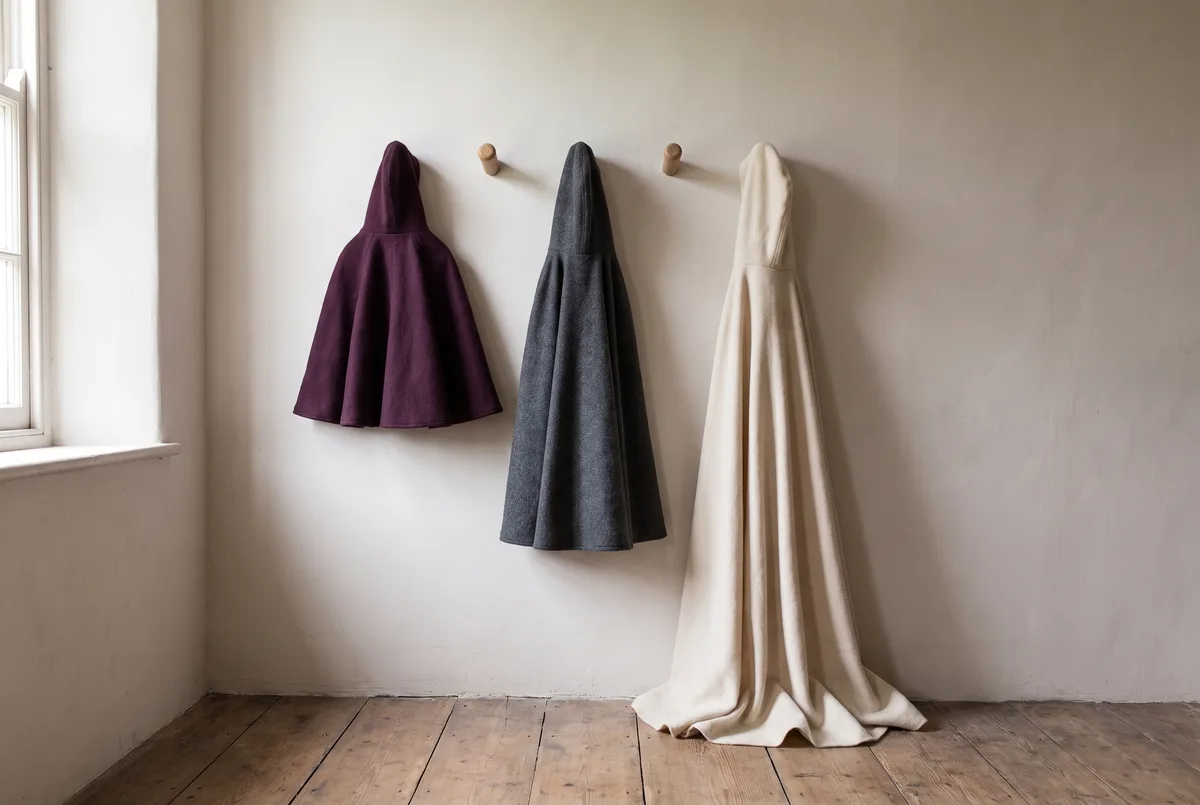 Left and centre both work. The one on the right is the version sold in shops, and the pooled hem is exactly what gets stood on going upstairs.
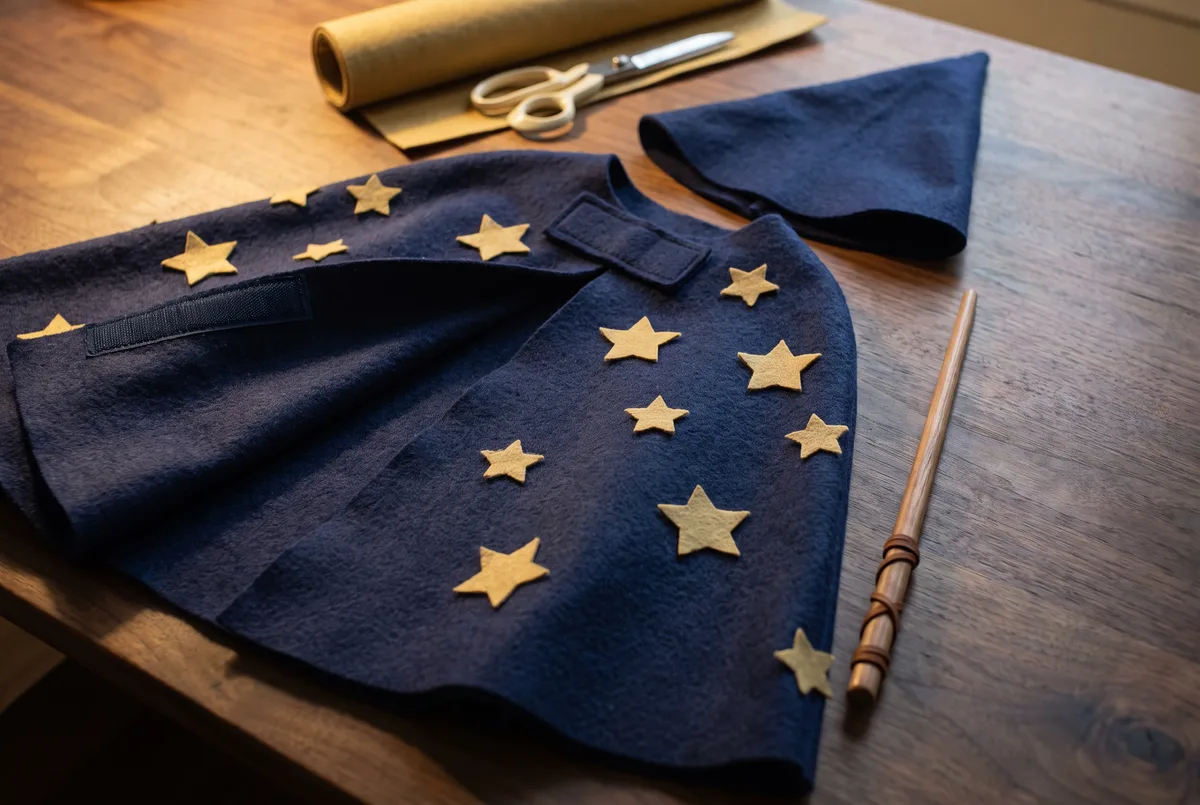
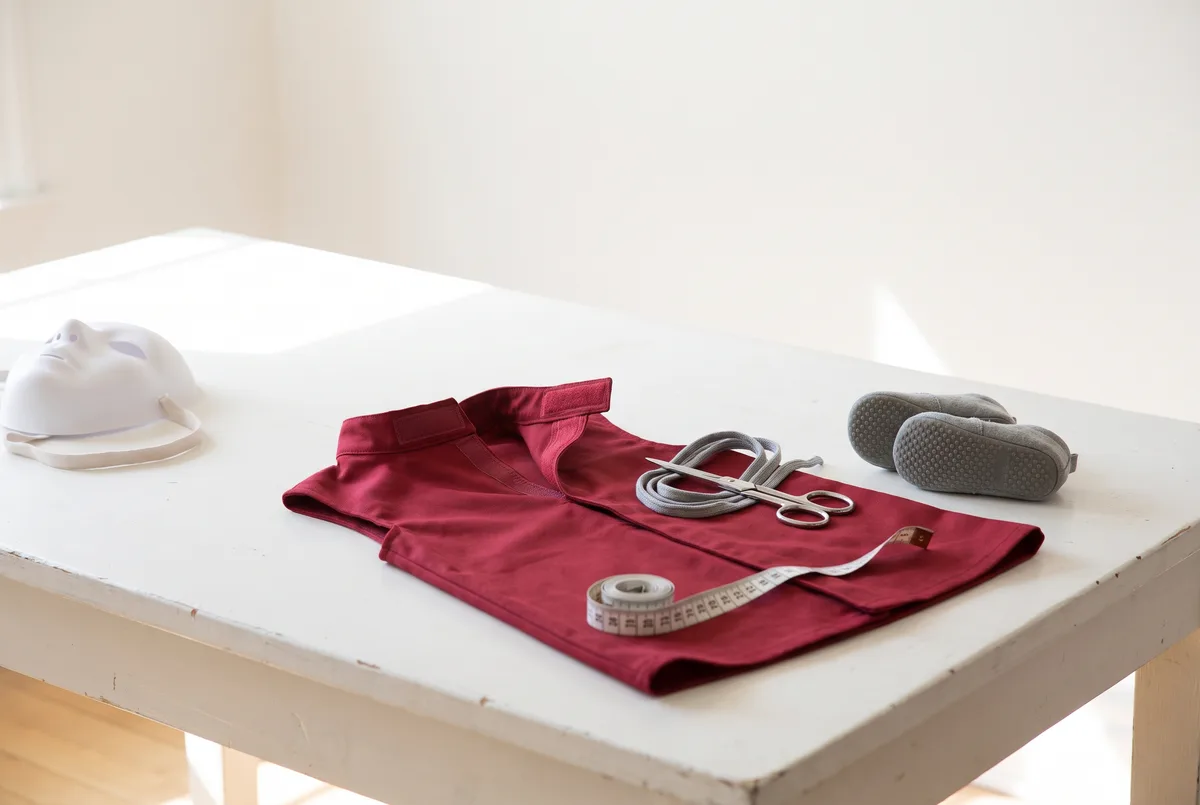
Closure: a hook-and-loop tab or a snap, never a tie. Capes catch on bannisters, chair backs, playground equipment, and other children. The closure must release under load. If a bought cape ties at the throat, cut the ties off and add a tab — it takes about a minute, and it is worth doing before the first wearing rather than after.
Fabric: fleece or felt. Neither frays, so cut edges need no hemming, and both hold the weight and swing that makes a cape feel good to wear. Costume satin is the common alternative and is worse on every count — it frays, it is slippery, it is unpleasant against skin, and it is the most flammable option on the shelf.
Sleeves are optional and mostly a liability. Wide wizard sleeves trail through paint, food, and door handles. A sleeveless cape over a long-sleeved top gives the same silhouette with none of that.
The wand
Short, smooth, rounded at both ends. Roughly the length of the child's forearm.
Long thin wands lever against the hand and snap; they also become poking implements at exactly eye height, because that is where children hold them. A wand cut to forearm length survives play and is easier to keep hold of.
A wooden dowel around 8–10mm, a chopstick sanded smooth, or a tightly rolled paper tube all work. Cap or sand both ends. Add a wrapped cord grip, a spiral of ribbon, or a felt star at the tip.
Assume it will be put down and lost. Making a second one at the same time costs about four minutes and saves the afternoon. There are full instructions in our DIY wizard wand and cloak guide.
The hat, if they want one
Not required. Plenty of children dislike hats, and the character survives without one.
If you do make or buy one, keep it modest — much above about 12 inches from base to tip and it becomes a lever that tips off constantly and catches every doorway. A shorter cone stays on, and a hat that stays on beats a spectacular one being carried.
Alternatives that carry the character just as well: a star-print collar or scarf, a hood, a book satchel worn across the body, or simply the wand. For a child who removes headwear on principle, the satchel is the best substitute — it is unusual enough to read as costume and comfortable enough to forget about.
Detail that stays useful afterwards
This is where a small decision pays off for a year.
Choose generic wizard iconography — stars, moons, planets, keys, herbs, potion bottles, an old book. Avoid anything tied to one specific story or character. Generic detail lets the same cape become a sorcerer, an astronomer, a night sky, a fortune teller, a vampire, or a storm as the child's interests move, whereas a cape bound to one specific franchise is that thing until it is outgrown.
Apply detail with adhesive-backed felt or fabric glue rather than hot glue, which dries hard, cracks, and can leave sharp edges. Scatter shapes irregularly; an imperfect grid reads as a mistake while a scatter reads as intentional. Matte gold on navy or silver on charcoal looks far more expensive than it is.
Fewer, larger shapes photograph better than many small ones.
The book day version
School costumes have a specific and demanding requirement: the child wears it for six hours, sits at a desk, eats, uses the bathroom, and goes outside.
Build for that. Base outfit plus cape plus wand, and nothing else. Skip the hat if it will be sat on — and it will be sat on. Make sure the cape comes off in one movement without help, because at some point during the day it will need to.
Add a book satchel if you want one more element. It is genuinely useful, it holds the wand when the wand is inconvenient, and it does not restrict anything.
Send a spare hair tie or a small clip if hair and hoods are going to conflict. And write the child's name inside the cape collar — school costume pieces get taken off, put on radiators, and mixed up with everyone else's by about ten past nine.
What to skip
Full-face masks and heavy beards. They restrict vision and breathing, they itch within minutes, and children remove them. Face paint or nothing.
Long trailing sleeves. Discussed above, but they deserve their own line, because they are the single most common reason a bought wizard robe fails in real use.
Anything requiring an adult to fasten. Back closures mean the costume can only be adjusted when you are available.
Light-up wands with accessible battery doors. If the compartment opens without a screwdriver, leave it. Swallowed coin cells cause severe burns within hours; the full reasoning is in our kids costume safety checklist.
Floor-length anything, one final time.
Afterwards
The reason to build a wizard costume properly is that almost all of it survives into ordinary play.
A well-made cape at the right length is the most-used single item in most dress-up collections — it becomes royalty, a superhero, a bat, a vampire, a storm, a detective in the rain. A blunt wooden wand becomes a conductor's baton, a magic stick, a sword, a microphone. Both belong in the working trunk rather than in a bag in the loft.
Store the cape folded flat rather than on a thin hanger, which leaves shoulder points in fleece. Keep the wand separately — standing in a jar or slid into a tube — because loose in a bin it snaps or snags other pieces.
Everything else, let go of. The hat that got crushed, the trim that shed, the sleeve that tore. Keeping the two pieces that earn their space is what makes next year's costume take twenty minutes instead of an evening.