The useful number is lower than the fun number
There is a number of dress-up pieces that is fun to own and a smaller number that actually gets played with, and the gap between them is where most dress-up collections end up stuck.
The mechanism is not mysterious. Choice has a cost. Every additional item adds a fraction of a second to finding what you want and a fraction of a minute to putting everything back, and past a certain point those two costs overwhelm the benefit of having more options. The child stops choosing and starts tipping the container out, which is a different activity — entertaining, but not dressing up.
What follows are ranges rather than targets. The number is a proxy for the thing that actually matters, which is whether your child can find a piece without excavating and reset the collection without you.
Count everything that creates a decision
The most common miscount is treating accessories as free. They are not.
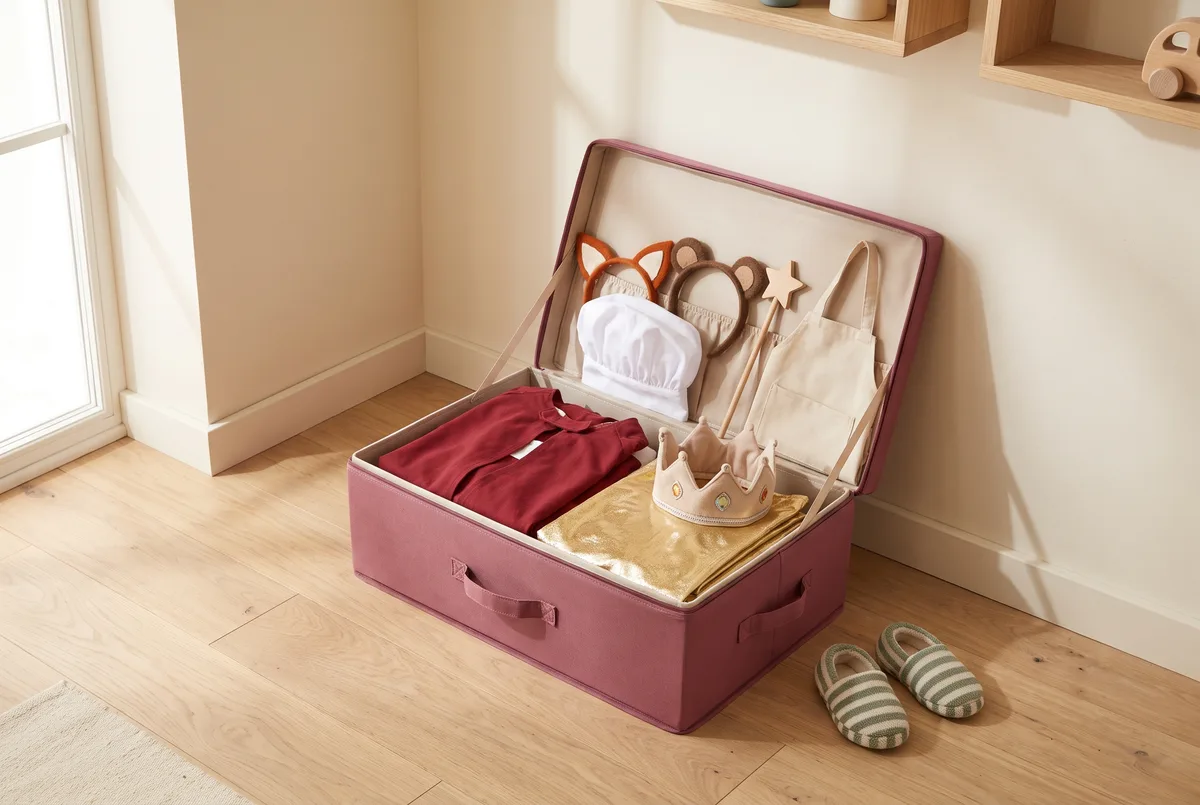
A crown is a decision. So is a wand, a pair of glasses, a badge, a bag, a hat, and a pair of shoes. Each adds to the choosing time and — because small items are exactly the ones that scatter — rather more than its share to the tidying time. A collection of eight garments and fifteen accessories is a twenty-three piece collection, and it will behave like one.
Count clothing, headwear, footwear, props and accessories together. If the total is well above the range for your child's age, that is worth knowing before you buy anything else.
The ranges
| Age | Working set | Why this range | Typical mix |
|---|---|---|---|
| 18 months – 3 years | 5 – 8 pieces | Wearing is the game; stories are short. Choosing from more than a handful is not yet useful | 2 capes, 1–2 soft head pieces, 1 wrap or tabard, 1–2 large props |
| 3 – 5 years | 8 – 12 pieces | Story-driven play begins and children start assigning roles, so a second cape and more role markers earn their place | 2–3 draping pieces, 2 head pieces, 3–4 role props, shoes |
| 5 – 8 years | 12 – 18 pieces | Costumes get specific and children begin combining and modifying rather than just wearing | Above, plus fabric they can cut, fasteners, and one or two specific-character pieces |
| 8+ | Varies, usually fewer | Interest narrows and often shifts from wearing to making | A small set of favourites, plus materials |
Two things about the top row of that table. Toddler collections drift upward faster than any other age, because well-meaning gifts arrive at exactly the age the child can use the fewest pieces. And the elementary range looks generous but is frequently the easiest to satisfy from what is already in the house.
The last row surprises people. Around eight, many children stop dressing up and start building — and a collection that keeps growing at this point is usually being maintained by the adult rather than requested by the child.
Room size moves the number
The ranges assume the collection lives somewhere the child plays and can be reset in a few minutes. Space changes that.
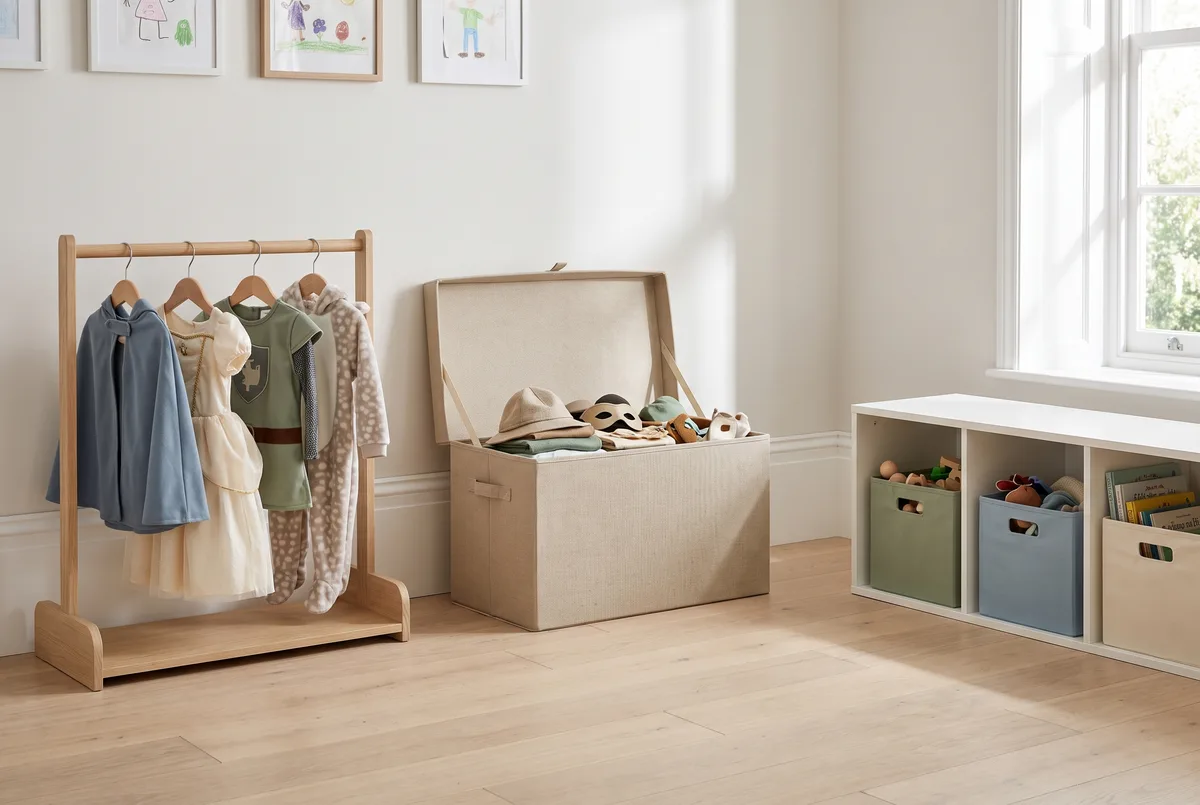
A shared bedroom or a living-room corner pushes the number down, often by a third. Storage that has to be closed at the end of the day cannot be large, and a collection that has to be invisible by evening will realistically be smaller.
A dedicated playroom allows the top of each range, though it does not require it — a large room makes a large collection possible rather than desirable. The reset test still applies.
Multiple children sharing does not multiply the number. Two children of similar age can share a working set of twelve to fifteen quite happily, and sharing is easier when the pieces are open-ended rather than character-specific — two capes are shareable in a way that two named character outfits are not.
Build a capsule, then stop
The most reliable way to hit a good number is to fill roles rather than accumulate items.
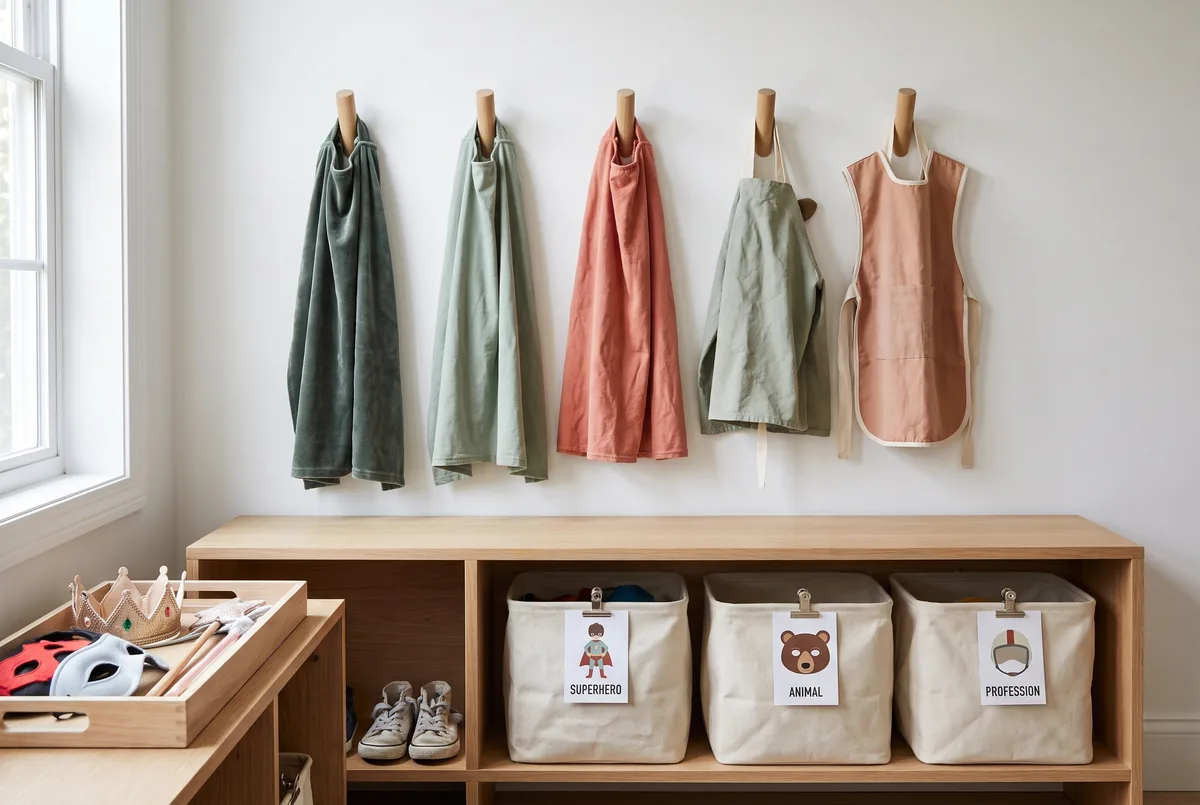
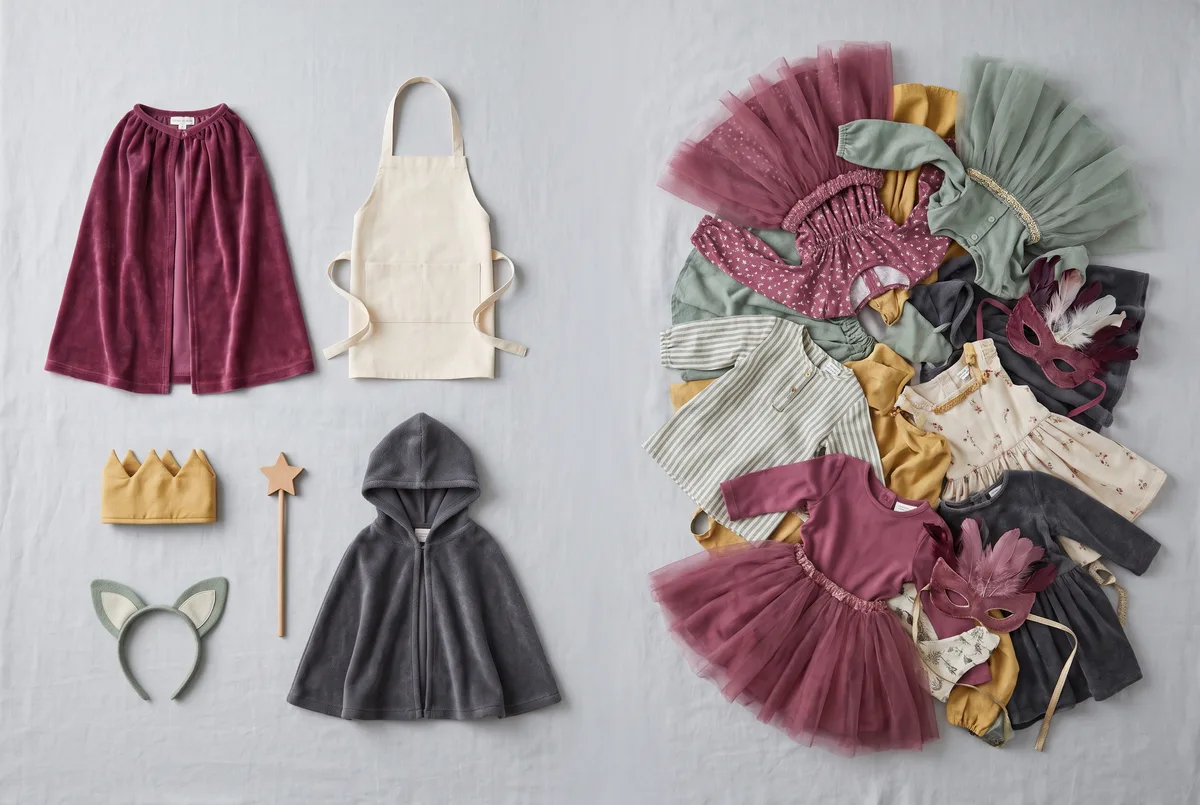
A working capsule needs: something that drapes (two capes, or a cape and a length of fabric), something for the head (two soft pieces), something that changes the body shape (a tabard, apron, or vest), two or three role markers (wand, bag, glasses, spoon), and footwear that grips. That is eight to eleven items, and it covers most of what a child under six will invent.
Once every role is filled, additional pieces produce sharply less new play. A third cape adds a colour; a fourth adds almost nothing. This is the point where more spending stops buying more play, and it arrives earlier than most people expect.
Open-ended pieces stretch the capsule furthest. A plain cape can be six characters across a week; a specific character outfit is one character indefinitely. There is more on choosing individual pieces in our dress-up trunk guide.
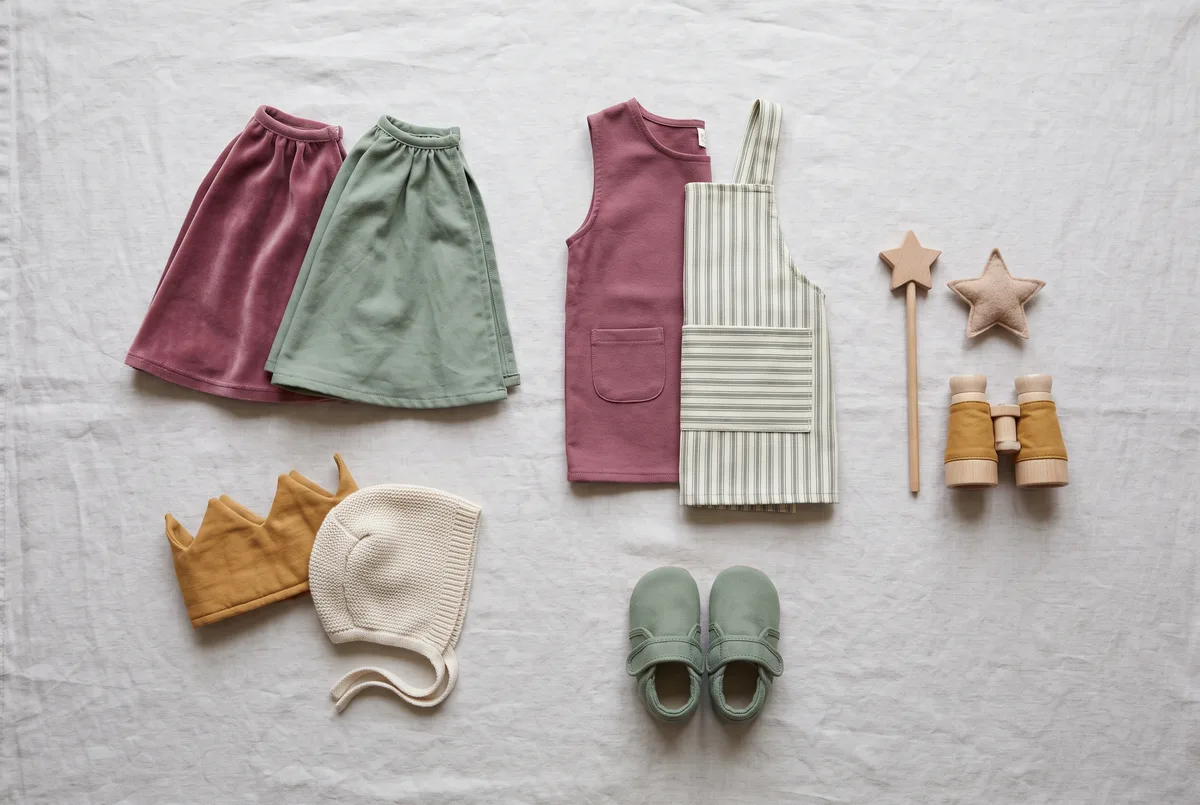 Ten items filling five roles. Adding an eleventh in a category that is already covered buys noticeably less new play than the first item in an empty one.
Four signs the collection is too big
None of these require counting anything.
They tip it out. If finding one item routinely means emptying the container, the volume has passed what can be searched. This is the clearest signal there is.
Cleanup stalls halfway. A child who starts tidying willingly and then drifts off is not being defiant — they have hit the point where the remaining task looks longer than their attention. Fewer pieces finishes the job.
The same three things are always worn. A collection where most items have not been touched in a month is not a collection of twenty, functionally. It is a collection of three with a lot of packaging around it.
You cannot list it. If you genuinely do not know what is in there without looking, your child certainly does not, and anything they cannot remember owning is not producing play.
Rotation instead of purchase
When the collection has grown past the range, the instinct is to buy better storage. Rotation is cheaper and works better.
Move the surplus into a reserve box on a high shelf and swap three or four pieces every three or four weeks. The working set stays inside the range, the child gets novelty without anything new being bought, and — the genuinely useful part — you find out what gets missed.
Absence is a better test of attachment than presence. A piece sitting in an open bin gets picked up because it is there; a piece that has been gone a fortnight and is actively asked for is a real favourite. Run two or three cycles and the collection sorts itself into keep and let-go without you having to make a judgement call about any of it.
Let the collection earn its space
The question in the title has a number as an answer, but the number is not really the point.
A collection is the right size when a child can walk up to it, see what they own, take out what they want, and put it back afterwards without help. That is achievable at eight pieces and at eighteen, and unachievable at forty regardless of how good the storage is.
Buy for the roles rather than the count. Rotate rather than expand. And when a piece has been ignored across two or three cycles, let it go — a smaller collection that is fully in use is worth considerably more than a large one that is mostly stored.