Space play needs a job, not a costume
Most dress-up themes are about being somebody. Space is unusual: it is about doing something. Astronauts in children's play are almost never standing around being astronauts — they are collecting samples, fixing a panel, checking a readout, landing something.
That changes what is worth buying and making. A convincing astronaut suit will hold attention for about as long as it takes to put on. A cardboard control panel with buttons that do nothing will run for an hour, and will still be there next week.
So the useful split is roughly: spend twenty minutes on the uniform and the rest on the props and the mission. This is also the cheapest theme in the whole dress-up category, because almost all of it is cardboard and foil.
The uniform, from the wardrobe
Space uniforms are grey, white, navy, black, or silver, and most households already own the base.
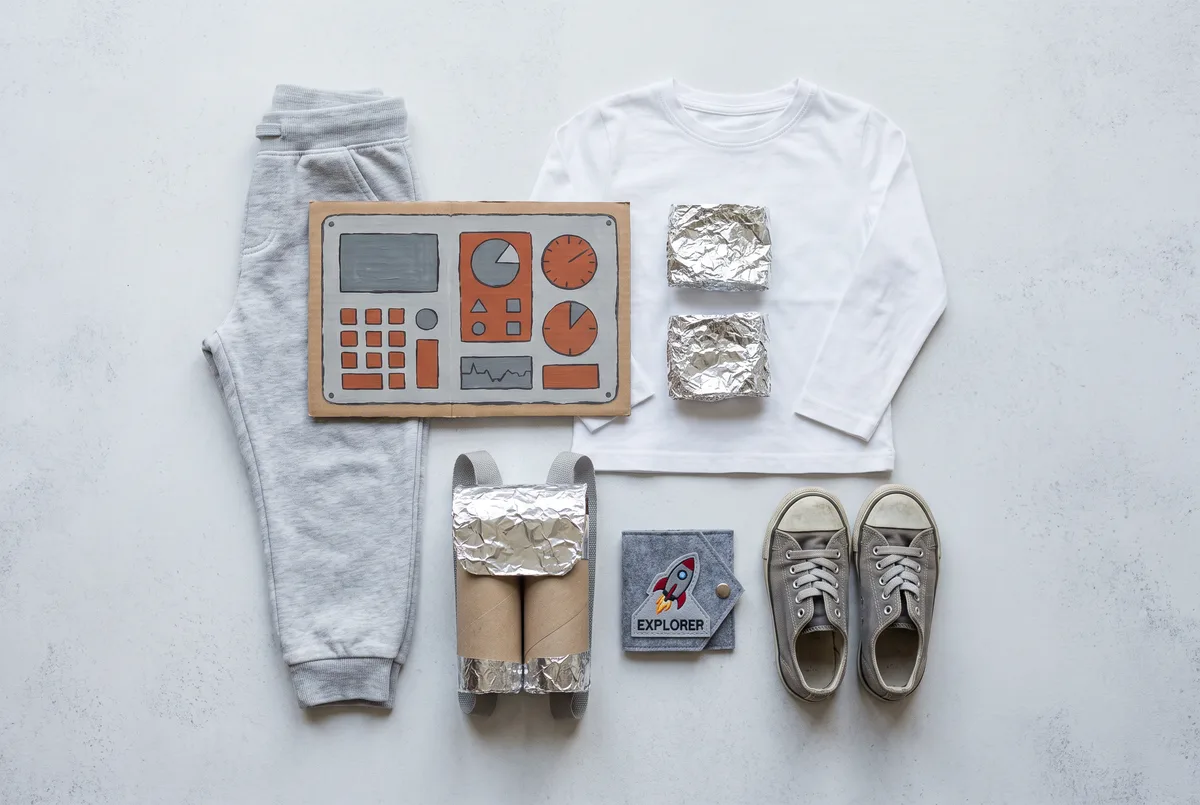
Plain joggers and a long-sleeve top in any of those colours is the whole foundation. Add one accent colour — burnt orange, teal, or red — as a patch, a stripe of tape, or a belt, and it reads immediately as a mission uniform rather than as ordinary clothes.
What makes this work is that real spacesuits are a uniform. Children recognise the type from the colour palette and one or two markings, which means you do not need accuracy, a full-body suit, or anything shiny and stiff.
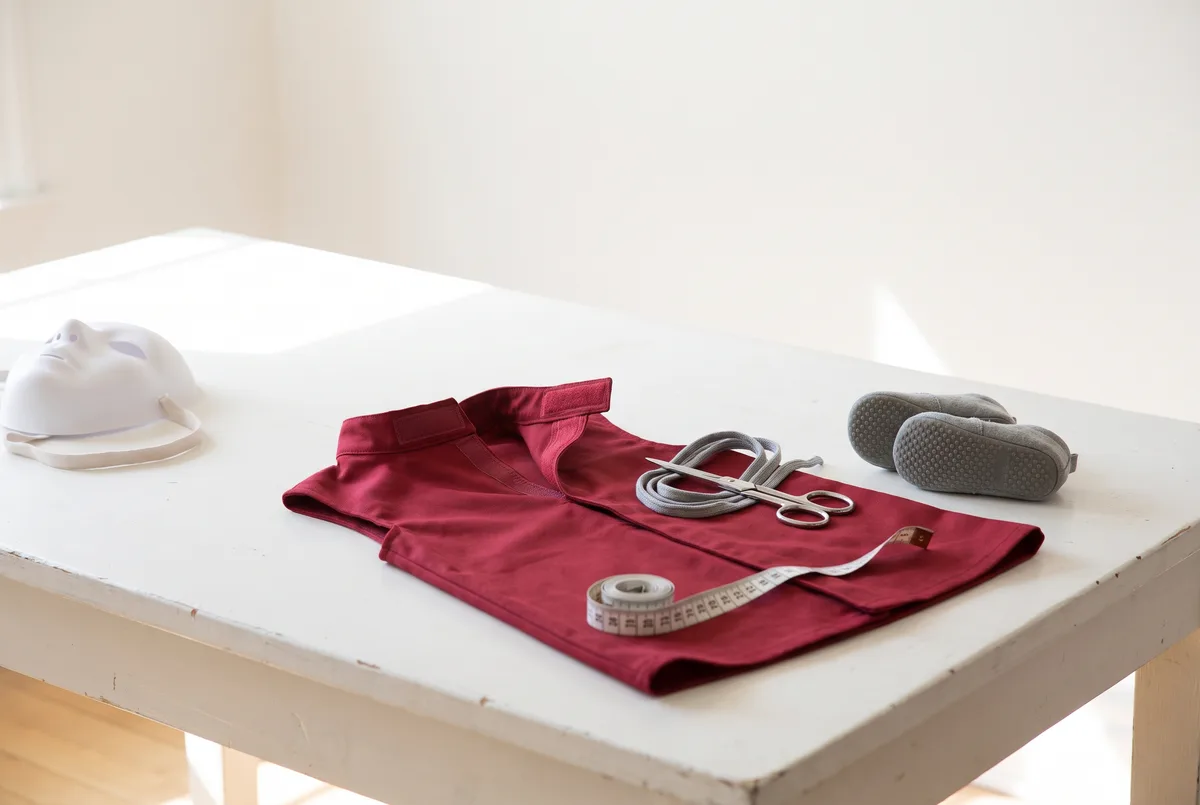
If you want one bought item, make it a plain grey or silver vest or tabard. It goes on over ordinary clothes, comes off in one movement, and layers over a jumper in winter.
Skip the helmet
This is the strong recommendation of the guide, and it goes against every costume set sold.
Rigid helmets and plastic bubble domes block peripheral vision, muffle hearing, get hot within minutes, and make it impossible to eat or drink. They are also the most expensive part of any bought space costume. Children remove them almost immediately, and then carry them, and then leave them somewhere.
Alternatives that read just as clearly:
- A white or grey cap or beanie, worn plain.
- A hood from a plain hoodie in the base colour.
- A silver or white collar — a strip of fabric or foil-covered card at the neck, which reads strongly as a suit neck ring.
- A headset, real or made from a headband and two foam circles. Excellent, because it also suggests communication, which prompts play.
- Nothing at all. The chest panel and cuffs carry the theme entirely.
If a child genuinely wants the helmet, treat it as a photograph item to be put on briefly and carried the rest of the time, and make sure they can take it off unaided.
Props worth building
This is where the play lives, and all of it is cardboard.
A chest control panel. A rectangle of card with painted dials, circle-sticker buttons, and a drawn readout, attached with ribbon over the shoulders or hook-and-loop tabs. The single highest-value item — it is worn and operated.
Wrist cuffs. Card strips wrapped in foil, fastened with tape or hook-and-loop. Two minutes each, and they finish the silhouette.
A jet pack. Two lightweight cardboard tubes wrapped in foil, attached to a small backpack or a card panel with ribbon straps. Keep it genuinely light — a heavy pack is uncomfortable and a real trip hazard when the child sits down. No trailing hoses.
A mission patch. Felt or card, on the chest or shoulder. Let the child design it; a patch they invented is treated as meaningful in a way a bought one is not.
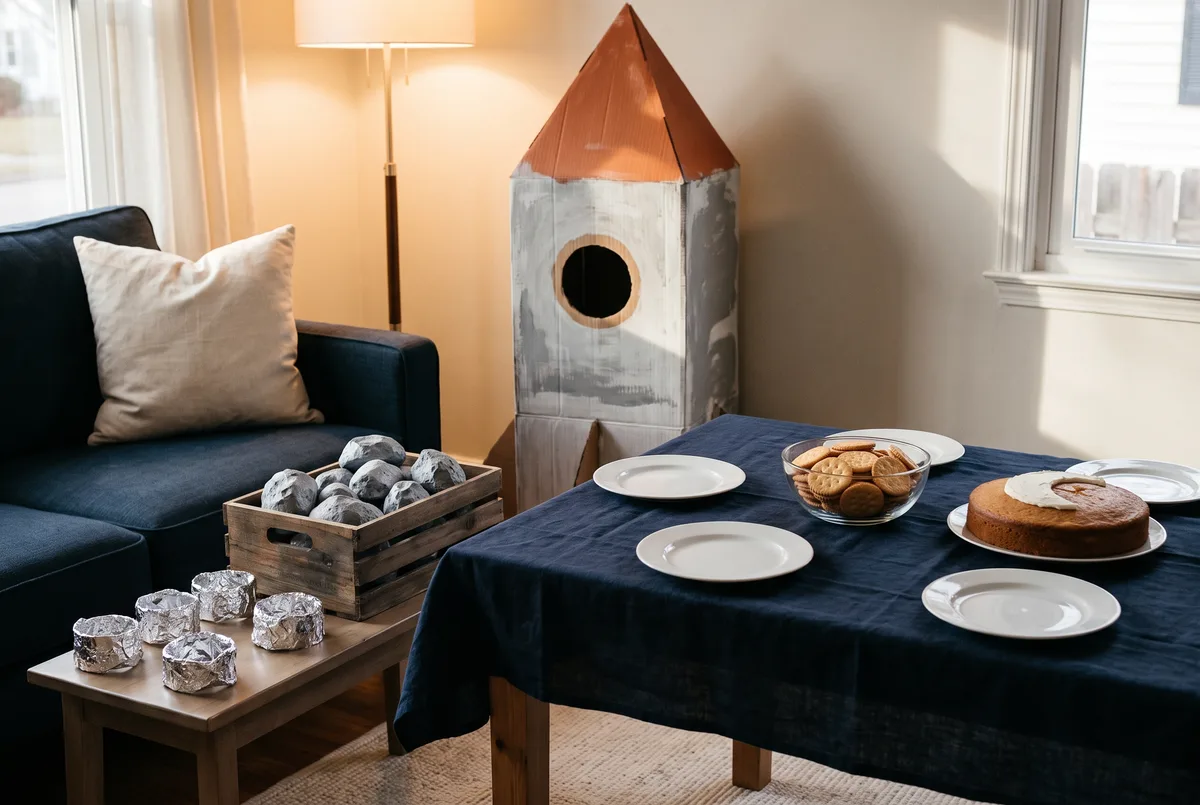
Moon rocks. Pebbles painted grey, or scrunched foil balls, in a shallow basket. Absurdly cheap and reliably the most-played-with item on this list.
A clipboard and checklist. Real paper, real pencil. Children take real objects more seriously than toy versions, and a clipboard turns wandering around into an inspection.
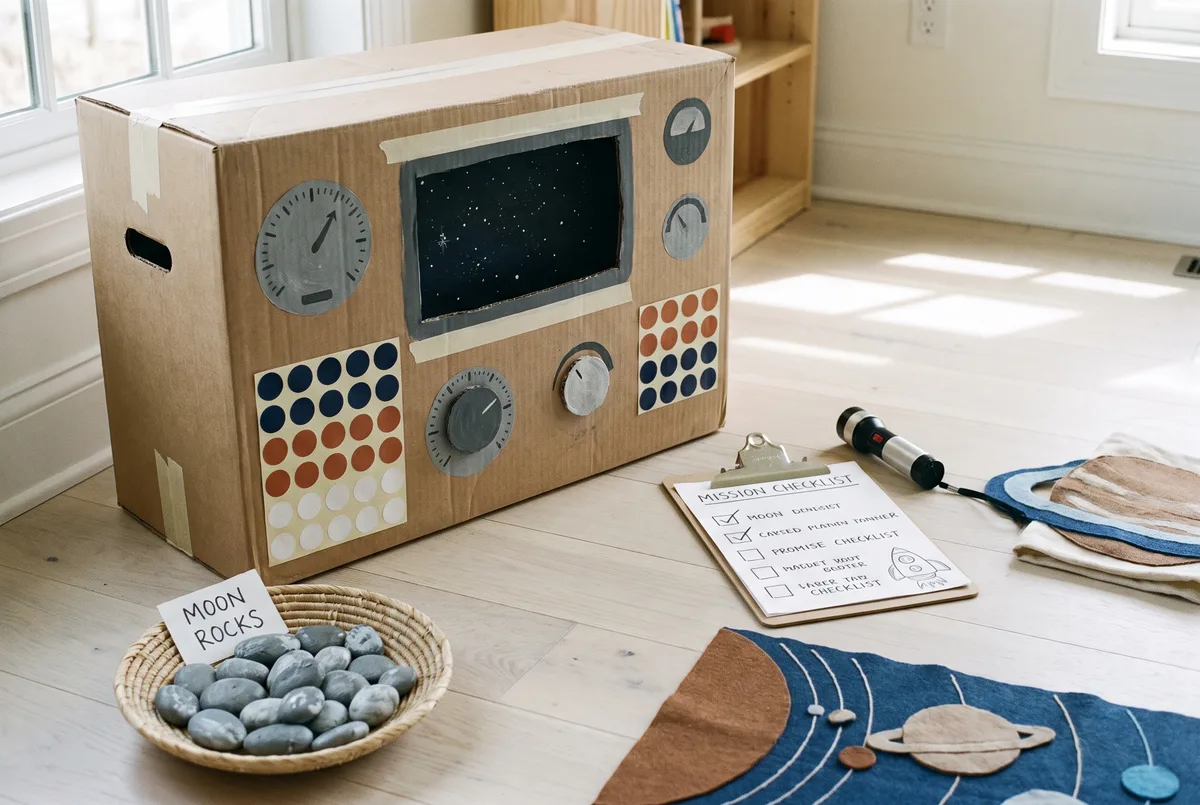 The console is a cardboard box and the moon rocks are painted pebbles. Nothing here does anything, which is precisely why the child has to supply the story.
Missions that keep it going
An outfit ends when the child takes it off. A mission ends when it is completed, which is a much better structure.
Sample collection. Hide fifteen moon rocks around a room and say the number. The stated total is what makes it finish rather than fizzle.
Repair the panel. You announce a fault; they diagnose and fix it. Endlessly repeatable, requires nothing, and children take the diagnosis part extremely seriously.
Mapping. A large sheet of paper, and they draw the planet as they explore it. Good for a child who prefers quiet play.
Supply run. Deliver items from one room to a station in another. Excellent for burning energy indoors.
Launch countdown. Ten seconds, a lot of noise, then something happens. Popular with younger siblings and a good way to include a range of ages.
The pattern in all of these is a stated goal and a clear end. Open-ended "play astronauts" produces about ten minutes; a mission with a number in it produces an afternoon.
What to avoid
Rigid helmets, covered above, but worth repeating as the main one.
Heavy backpacks. A weighted jet pack changes balance and hurts on a fall backwards. Cardboard and foil only.
Trailing hoses and cords. Sold on plenty of costumes; they are a trip and entanglement hazard and add nothing a painted line cannot.
Full-body inflatable or padded suits. Hot, restrictive, impossible in a bathroom, and they prevent floor play — which is most of what space play is.
Anything with an accessible battery door. Light-up panels and toy communicators frequently use coin cells; if the compartment opens without a screwdriver, leave it. Our kids costume safety checklist covers why.
Keep the kit together
Space play is rebuilt rather than continuous — it comes back every few weeks, often after a book or a programme.
Store the whole set in one labelled box: vest, cuffs, chest panel, patch, moon rocks, clipboard. When the interest returns, the theme is available in thirty seconds rather than needing to be reassembled from four rooms. That difference decides whether it comes back at all.
Cardboard props have a limited life, and that is fine. When the panel softens at the folds, keep the ribbon straps and the sticker sheet and rebuild the card in ten minutes. The child usually enjoys the rebuild as much as the original.
The genuinely durable pieces — the vest, the basket, the clipboard, the torch — belong in the general dress-up collection rather than the space box. A torch and a clipboard are useful to an explorer, a detective, a vet, and a builder, which is a much better return than storing them for one theme.